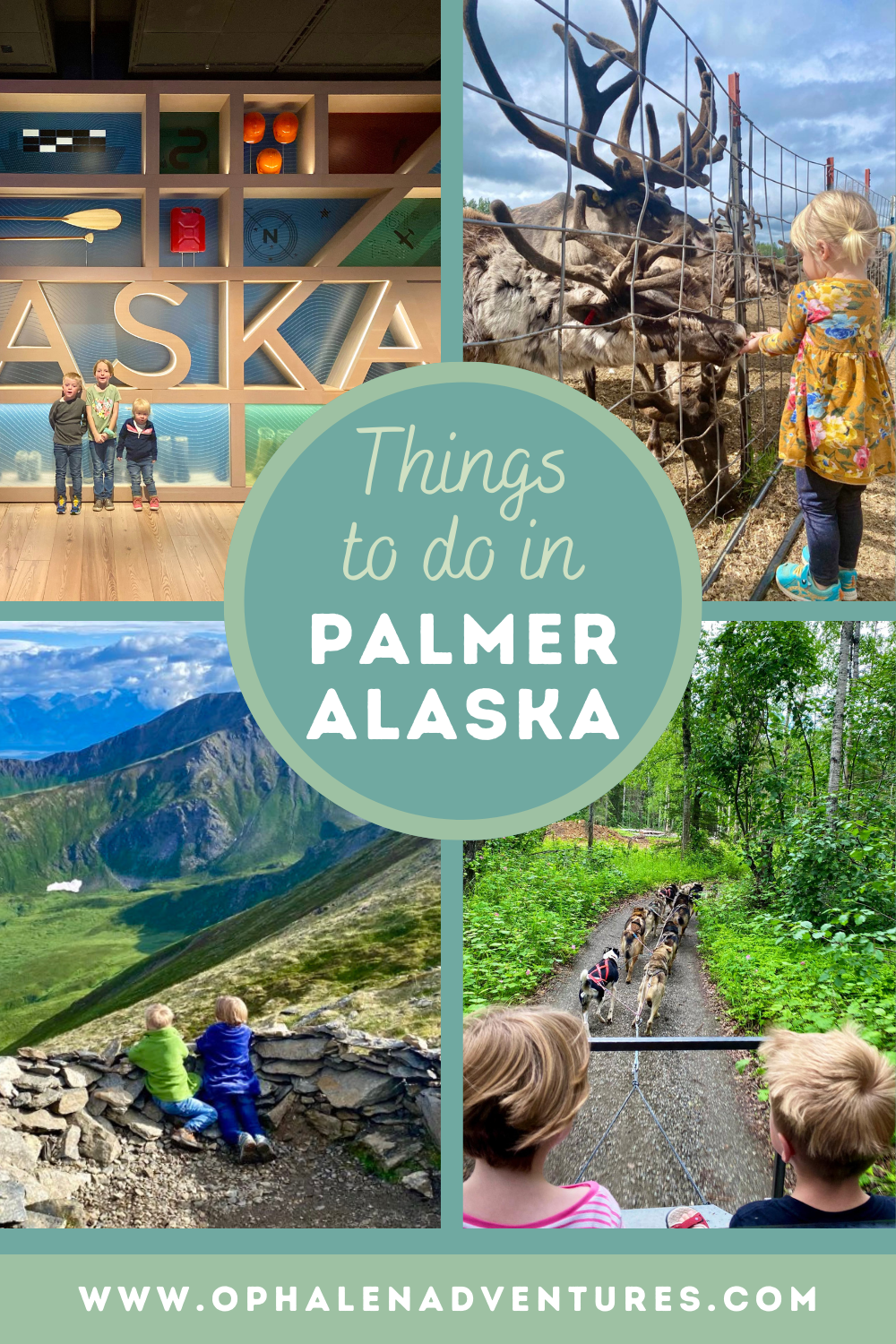
There are so many exciting and unique-to-Alaska things to do in Palmer Alaska that it was one of our favorite stops of the entire trip! We spent four months RVing Alaska, and Palmer absolutely captured our hearts. We even circled back to the area and installed solar panels so we could spend more time in Alaska camping off-grid!
Palmer has a few major things going for it:
Idyllic setting surrounded by gorgeous mountains
Proximity to outdoor adventures like Hatcher Pass and several glaciers
Several fun animal excursion options
Good base for enjoying the cultural offerings of Anchorage without being based in Anchorage (which was not our favorite)
Keep in mind that we visited from early June (which is still really spring!) until early September (which is definitely the beginning of fall!), so I can’t speak to things to do in Palmer Alaska during the winter. Before we get to my ideas, consider checking out our RVing Alaska e-book that has things like our favorite Palmer, Alaska RV park!
If you’re looking for Alaska vacation ideas, you’ve come to the right place! This guide features 20+ pages of what we learned throughout a summer RVing Alaska with Kids.
Okay, on to the many reasons why we loved Palmer Alaska!
Things to do in Palmer Alaska
Hatcher Pass
Possibly the best thing to do in and around Palmer is to explore the breathtaking Hatcher Pass. Do not, and I can not emphasize this enough, miss Hatcher Pass! We loved the hiking up there so much that I wrote a whole blog post just about hiking in Hatcher Pass. But even if you’re not a big hiker, it’s way worth the drive up. The views are amazing right from the road, plus you can visit the historic Independence Mine. You can even rent gold panning tools there and try your luck! Keep in mind that the road up to Hatcher Pass is only open in summer, so check before you go. Skiing and snowmobiling are popular winter activities up there, but I can’t speak to that!
Animal Encounters
Palmer is lucky to offer a couple of really fun animal encounters for tourists. We visited the Williams Reindeer Farm and loved feeding the reindeer there. It’s not a super cheap excursion and it’s definitely touristy, but where else can you pet a reindeer in the U.S.? Palmer also offers a Musk Ox farm where you can visit these unique animals, although we didn’t make it out there.
Dog Sledding
There are a variety of options for dog sledding excursions in and around Palmer and the rest of interior Alaska. They can be quite pricey, though, so are a bucket list sort of experience for visitors. But if you’re looking for a more budget option, The Iditarod Headquarters in nearby Wasilla is the perfect choice! In summertime, the tiny one-room museum offers short dog sledding rides for just $10 a person. It’s the cheapest way to have this special (and super fun!) experience in Alaska.
Downtown & Farmer’s Market
Palmer has a cute little downtown with a couple of breweries and cute restaurants. There’s a visitor center that gives some background into the unique history of the town (a depression-era project!). If you need any outdoor gear, there’s a great thrift store called Bishop’s Attic where I bought a few things, including hiking boots for $12. In the summer, there’s a farmer’s market and live music on Fridays.
Anchorage Museums
While not technically in Palmer, Anchorage cultural offerings are only about an hour away. The Anchorage Museum (free for ASTC members!) and the Alaska Native Heritage Center are two of my recommendations for places to day trip to from Palmer. Palmer makes a great home base for Anchorage attractions, but we didn’t love Anchorage too much, so I’m glad we didn’t spend a ton of time there.
Glacier Adventures
Everyone who comes to Alaska wants to see glaciers, right? Palmer offers two day trip options for glacier adventures, Knik Glacier and Matanuska Glacier. You can rent off-road vehicles to drive to Knik Glacier or pay to hike to or ice climb on Matanuska Glacier. More on my sample 7 day itinerary.
Eklutna Tailrace Fishing
During salmon season, Eklutna Tailrace offers the closest and most accessible salmon fishing option to Palmer. Salmon can be caught about 20 feet from the parking lot in abundance, just make sure you have a permit! Salmon fishing is a way of life here, so this definitely belongs on any list of things to do in Palmer Alaska.
Eklutna Lake
Eklutna Lake is a gorgeous nearby destination for hiking and paddle sports. There is a scenic trail around the edge of the lake, or you can get on the water with a kayak. Always wear a life jacket and watch the weather forecast here, though. It is beautiful, but someone dies on the water almost every year here because of the combination of strong winds and deadly cold waters.
Archangel Road Blueberry Picking
If you’re lucky enough to find yourself in Alaska during berry season (August!), then you can join the hundreds of folks picking fresh-off-the-vine blueberries. Archangel Road up in Hatcher Pass is an extremely popular and easy to access spot. Just pack the bear spray because they like them, too! And be sure you’ve correctly identified any berry you forage before eating.
Eagle RiverNature Center
The Eagle River Nature Center is another worthwhile trip between Palmer and Anchorage. There are many hiking trails (more about that on our best hikes in Alaska list!), and a high probability of wildlife spottings. Plus, it’s gorgeous!
Alaska State Fair
If you end up in Palmer when the state fair is on, this is a must on the list of things to do in Palmer Alaska. Popular entertainers perform, and there are so many events to choose from. Local vendors are here for souvenir shopping, and it’s one of the biggest events in the state if you’re looking for local culture!
Souvenir Shopping at Alaska Chicks
Alaska Chicks sells primarily sweatshirts, and has locations in Palmer, Wasilla, and Eagle River. These sweatshirts are SO high quality and in fun Alaska prints (like fireweed!). Once you’re familiar with what they look like, you’ll start to notice their sweatshirts on all of the locals! We got one for each of us, and we all love them.
I hope this list with ideas of things to do in Palmer Alaska was helpful in planning your time there! If you need more help planning your trip, check out my Alaska packing list and RV Alaska guide.
For more about adventuring in Alaska, check out these posts:
As you may have seen from our main RV renovation post, we gut renovated a 2007 Keystone Raptor 3612 and turned it into a beautiful home for our family of five. Here’s the original floorplan for our 2007 Keystone Raptor for anyone curious:
The aesthetics were obviously important, but we made some crucial upgrades for comfort and safety, as well. These are some things we may not have found as important if we were just weekending, but they were so key to making this rig feel like a home to us. As a full time RV family, these are the upgrades we found essential for full timing it in our 2007 Keystone Raptor!
2007 Keystone Raptor Full Time RV Upgrades:
Keyless Lock
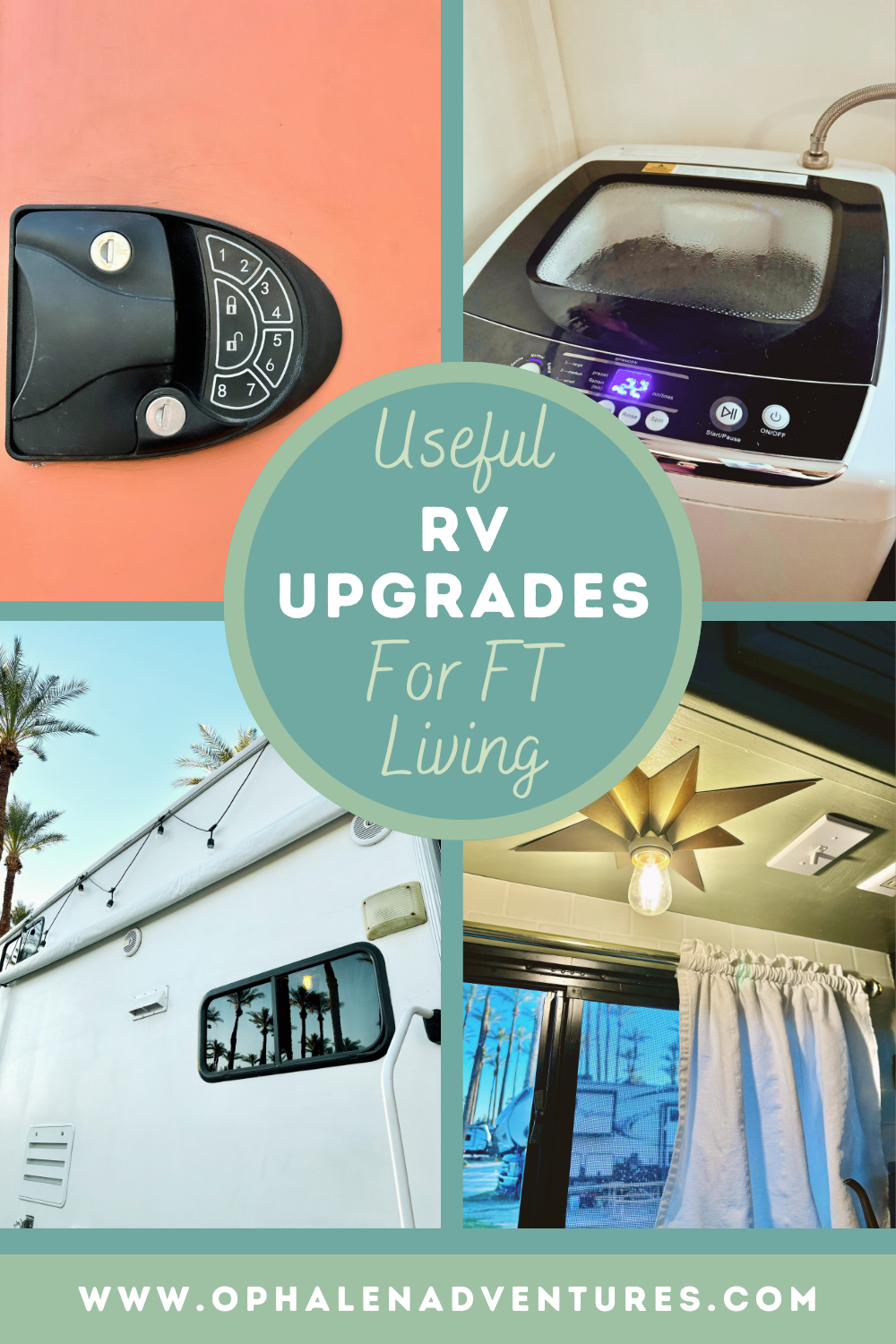
This was one of the first (and easiest!) upgrades we made. I hate keys, especially house keys. My clothes never have pockets and I don’t carry a purse, so I’m always losing keys. Plus, did you know that many RV front door keys are universal?? That sketched me out for sure. A keyless lock was a no-brainer.
Residential Mattresses
RV stock mattresses are SO uncomfortable on brand new rigs, and when you’re buying used? You definitely want to replace. We brought our residential mattress from our apartment, and the kids got foam mattresses in their bunks.
Washer & Dryer
We lived in NYC without an in-home washer and dryer for many years, and I knew that I wanted to prioritize having one in our tiny home! This washer hooks up directly to a sink, or I removed our bathroom sink to make room for ours. We have this dryer in a closet (unvented), and as long as we have the dehumidifier running and ventilation, it’s been fine.
Blackout Shades & Curtains
We made sure it’s possible to completely block out light and nosy neighbors on every window. I’ve written more about what we used on each individual window in the room-by-room posts, but it was suuuuch a good call to invest in quality window treatments. Not only did it serve us well during 24 hour sunlight on our Alaska trip, but we have had situations where our slides are almost touching the neighbors’ slides. In those instances, I’m SO glad we can completely block out the neighbors.
Warm Lighting
We replaced every light in the whole RV, and that had a massive impact on how cozy it is in here. We love our star light with these lightbulbs (just be aware that you’ll have to add a switch!). We replaced our dome lights with these and these for LED energy efficiency. This is really useful when boondocking because they use almost no power! I didn’t like how cool white they were, so I added an orange gel (theatre kid trick for warm lighting!).
New Awning
The original awning that came with our 2007 Keystone Raptor was in sad shape. It literally crumbled in our hands. We replaced it with a new one for just a few hours of work (three people working together was pretty necessary, though!) and $200. Considering how much we use our awning, this was money well spent. It helps the front yard feel like an extension of our home!
Floor Vent Covers
If you live in an RV for any length of time (especially with kids!), you will learn how quickly your RV floor vents will get absolutely NASTY! So many toys and so much debris falls right down in there. These magnetic screen vent covers are SO useful for preventing most of that.
A Good Couch
The furniture that most RVs come with is pretty uncomfortable. I can’t recommend a good replacement couch myself because we brought our sectional from home. But I can highly recommend replacing your couch with a residential one. Just keep in mind that you need something lightweight! Consider weighing what you take out so you know how much weight you can add back in.
Organization & Storage Everywhere
Living tiny requires being extra organized to avoid a massive mess! We invested a few hundred dollars into various storage items so that our cabinets and closets stay organized, and I’m so glad we did. I even wrote a whole post just about RV storage ideas!
Shoe Storage in Stairs
Speaking of storage, I ripped apart our stairs to add some inside! I love that our stairs hide extra shoe storage, and you can see them in action in this reel.
Torklift Exterior Stairs
Our exterior stairs were hideous, rusty, and awfully wobbly. We got by with them our first year of RVing by simply spray painting them for improved aesthetics. But it didn’t solve how hard it was to collapse them or how much it rocked the entire RV for someone to step on them. Torklift stairs to the rescue! These were a major upgrade in function and looks. You can see the transformation in this reel!
X-chocks & Kingpin Stand
You might start to notice a theme, which is that I’m not a big fan of the camper rocking. Two pieces of gear that I’d highly recommend to help with that are x-chocks between the tires and a kingpin stand if you have a fifth wheel. These two things combined make a noticeable difference when used together, and I miss them when we skip setting them up!
Outdoor String Lights
These aren’t so much a “renovation” upgrade as an easy gear purchase, but they are an essential for cozy RV living, in my opinion! We love these solar outdoor lights for how beautiful they are and how they run on their own tiny solar panel when we’re boondocking!
Updated Smoke & Propane Detectors
One of the most essential safety upgrades we made to the interior was immediately updating the smoke and propane detectors. We also made sure that there’s a smoke detector in every room! Especially when you buy a used RV, this is an important update because these detectors do expire.
Wifi Doorbell Camera
This is an update that allows for recording what happens at your front door, just like many folks have in their sticks and bricks homes these days. The Google Nest doorbell will work in your RV, as long as you have reliable wifi! Many people feel more secure leaving their RV while boondocking with a way to see what’s happening at their front door.
New Tires
Truthfully, anyone buying a 2007 Keystone Raptor should immediately replace the tires (unless the previous owner has just done so!). Regardless of whether you’re a weekend RVer or full timing it, this is a crucial safety upgrade. But it’s even more important if you’re full time RVing and driving more frequently. It’s expensive (it costs us in the neighborhood of $1,000 each time!), but so essential.
Solar Panels & Upgraded Batteries
If you’re planning on boondocking for any length of time, solar panels and upgraded batteries are CLUTCH. Here’s a look at similar to what we’ve installed, and if you’re curious what that runs on our 2007 Keystone Raptor, check out my boondocking guide for more information:
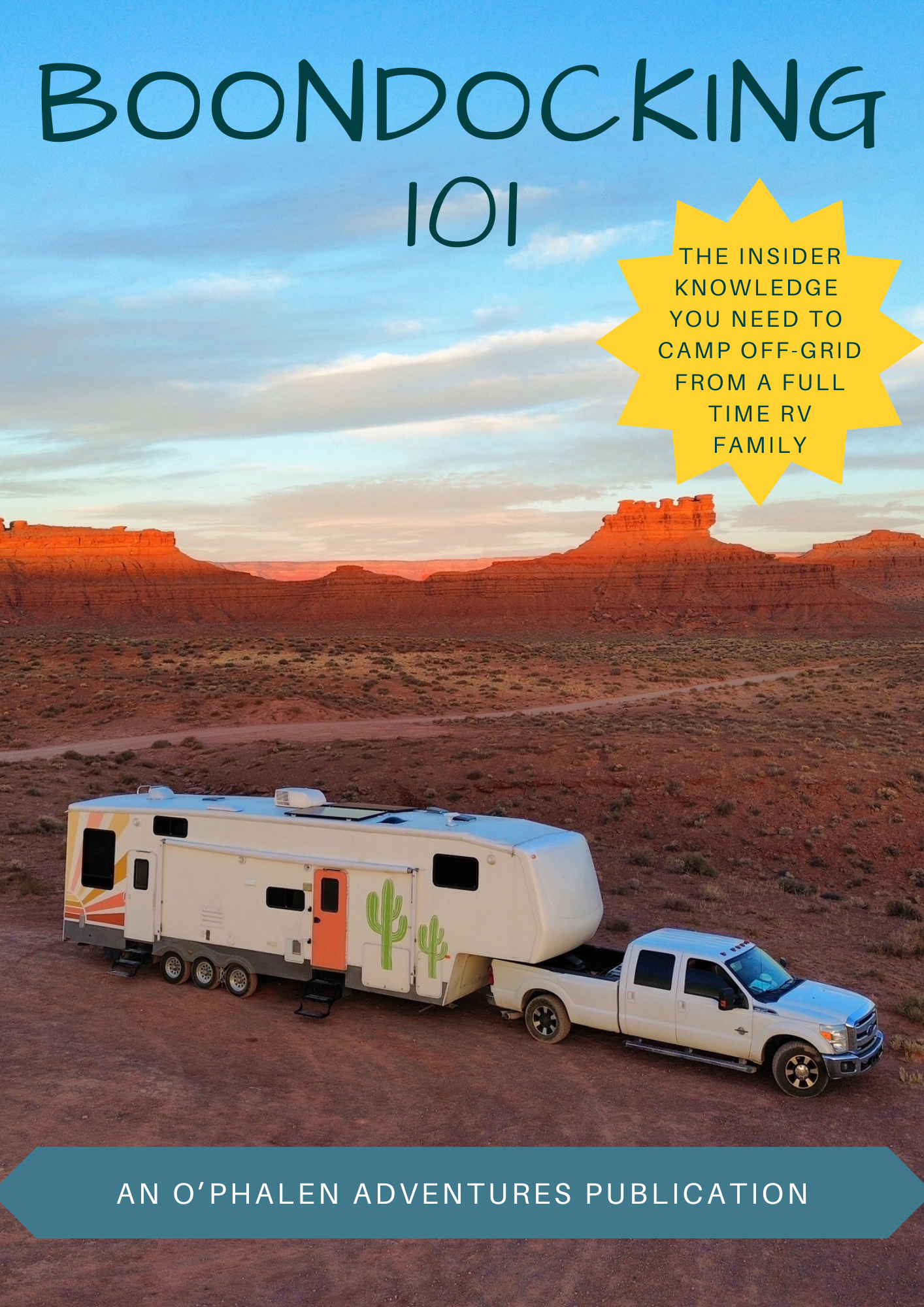
This 10-page guide will assist RVers in learning the basics of boondocking, or camping off-grid! We share everything we’ve learned as a family living off-grid and boondocking in our RV.
I hope this list of the upgrades we made to our 2007 Keystone Raptor for full time RV living was useful! If you’re interested in everything we used in our gut renovation, you can check out the full list here.
Disclaimer: Product links in this blog post may be Affiliate links, and I will earn a small commission for each purchase made through these links at no extra cost to you. Affiliate income helps fund our family travel and allows me to keep creating inspiring family travel content for you. I so appreciate when you use my links to make purchases you would have made anyway.
For the rest of our RV renovation ideas, head to our main renovation post. For more about RV life, check out these posts:
We’ve been full time travelers for almost four years now, and we’ve traveled in several different ways. We’ve lived in Airbnbs, we’ve parked our toy hauler RV exclusively in campgrounds, and now we’ve mastered camping off grid. So I feel really qualified to answer the question: what is boondocking? And even more qualified to tell you why we love it and help you learn how to do it, too.
If you’re considering RV life, or if you’re a seasoned RVer who’s intimidated to learn how to boondock indefinitely, this is the post for you! I was really overwhelmed by learning how to boondock successfully (with three small children!). But we’ve lived off-grid for most of the past year now. If you want someone to make it SUPER simple and SUPER easy to learn how to boondock, I’m your gal!
What is Boondocking and Why Is It Different?
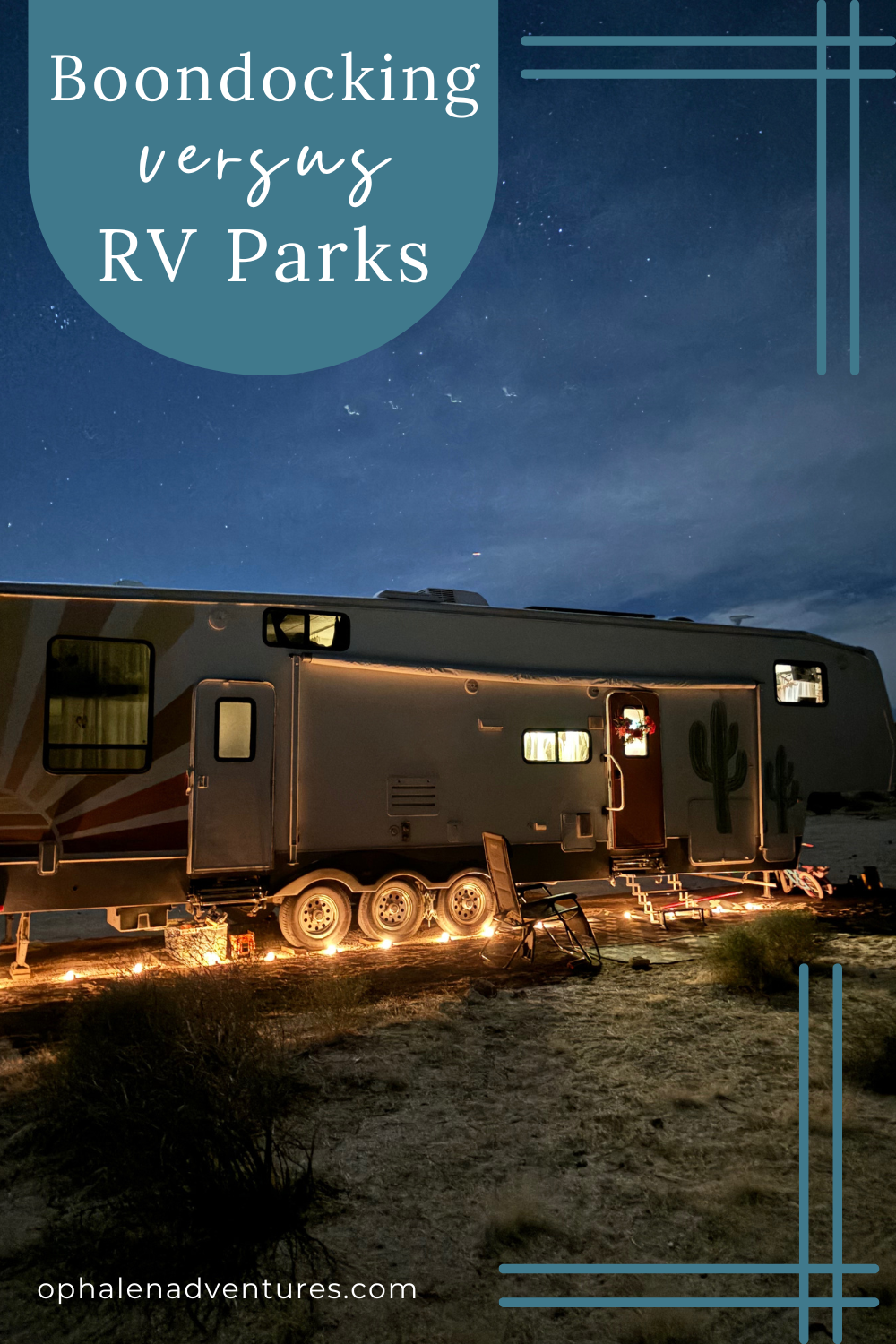
So seriously, what is boondocking? It’s a funny word that just means camping anywhere that’s not a campground and that doesn’t have power, water, or sewer hookups. It’s both logistically more complicated than RVing in a campground and also SUPER cool to do! All of those amazing out-your-front-door views you see van life or RV people posting on social media? They’re probably boondocking.
I’ve created a guide that’s just SEVEN dollars that will walk you through everything you need to know to get started boondocking, from how to find boondocking sites to how much solar we have to tips for water conservation to rules for being a good boondocking neighbor.
Get the INSTANT download right now, with all of my best boondocking tips and tricks so you can start enjoying these fantastic views, too:
This 10-page guide will assist RVers in learning the basics of boondocking, or camping off-grid! We share everything we’ve learned as a family living off-grid and boondocking in our RV.
This guide is packed full of ten pages of everything I share with RV friends around the campfire about how we’ve enjoyed the MOST amazing boondocking sites and saved THOUSANDS of dollars on campgrounds this past year. I wrote the guide I wish I’d had when we were first learning!
What is Boondocking: Pros & Cons of Camping Off-Grid
Okay, so you want to know more about WHY boondocking is worth it. And also why sometimes it sucks. I’m here to tell you! We’ve done both — lived full time in RV parks and also lived full time off-grid.
Here are the boondocking pros:
Seriously, have I mentioned the views? SO MUCH PRETTIER than staring at your neighbor’s slide.
You can often camp closer to hiking, kayaking, and other outdoor adventures
It’s free or extremely cheap, while RV parks can cost anywhere from $500-$2000ish a month (we averaged about $1,000 a month)
There’s so much room for our kids to play without silly campground rules or cranky park neighbors
Dark night skies for things like stargazing (and northern lights!)
You don’t have to have months of an itinerary planned at a time
It’s easy to change plans and stay longer if you love a place or there’s an emergency
Sunsets, sunsets, sunsets
Okay, so what are the boondocking cons:
You have to pay close attention to your power and water consumption (but I’ll teach you some tricks in the guide!)
Sometimes campgrounds are more centrally located to towns
It can be nice for adults and kids to have campground neighbor friends
You don’t have campground amenities like pools, laundromats, or activities
Roads to access boondocking sites are often bumpy
It’s more difficult to keep your rig and your possessions clean
What is Boondocking: Tell Me More About How You Do It
We’ve spent almost a year living primarily off-grid now, and our routine looks about the same except for when we’re traveling to get somewhere quickly. We generally boondock in a spot for two weeks, then dump and fill our tanks on the way to another spot where we’ll spend two weeks. Every month or two, we’ll mix in a short stay at an RV park to deep clean everything (including ourselves!).
I share our top four favorite boondocking sites of the past year in the Boondocking 101 guide! But I also plan to share many more sites that we discover right here on the blog.
Here are all of the boondocking spots I’ve blogged about so far:
I hope this post has been helpful as you consider whether you too might like to jump into boondocking. If you want to take a look at our boondocking gear list on Amazon, check it out! At the very least, I think we’ve definitively answered the question: what is boondocking? 🙂
Disclaimer: Product links in this blog post may be Affiliate links, and I will earn a small commission for each purchase made through these links at no extra cost to you. Affiliate income helps fund our family travel and allows me to keep creating inspiring family travel content for you. I so appreciate when you use my links to make purchases you would have made anyway.
For more posts about our full time travel life, check out these posts:
We just spent a couple of weeks in Tucson, Arizona, and we love it there. It’s actually our second time visiting this artistic desert city, so we’re full of ideas for things to do in Tucson with kids! As a full time travel family, it’s rare that we re-visit cities, so you know this one has to be fun.
If you happen to be traveling in an RV and are looking for a place to stay, here are our favorite Arizona boondocking spots. And if you’re planning an Arizona road trip, you might want to check out Sedona with kids, too!
Things to do in Tucson with Kids: Hiking
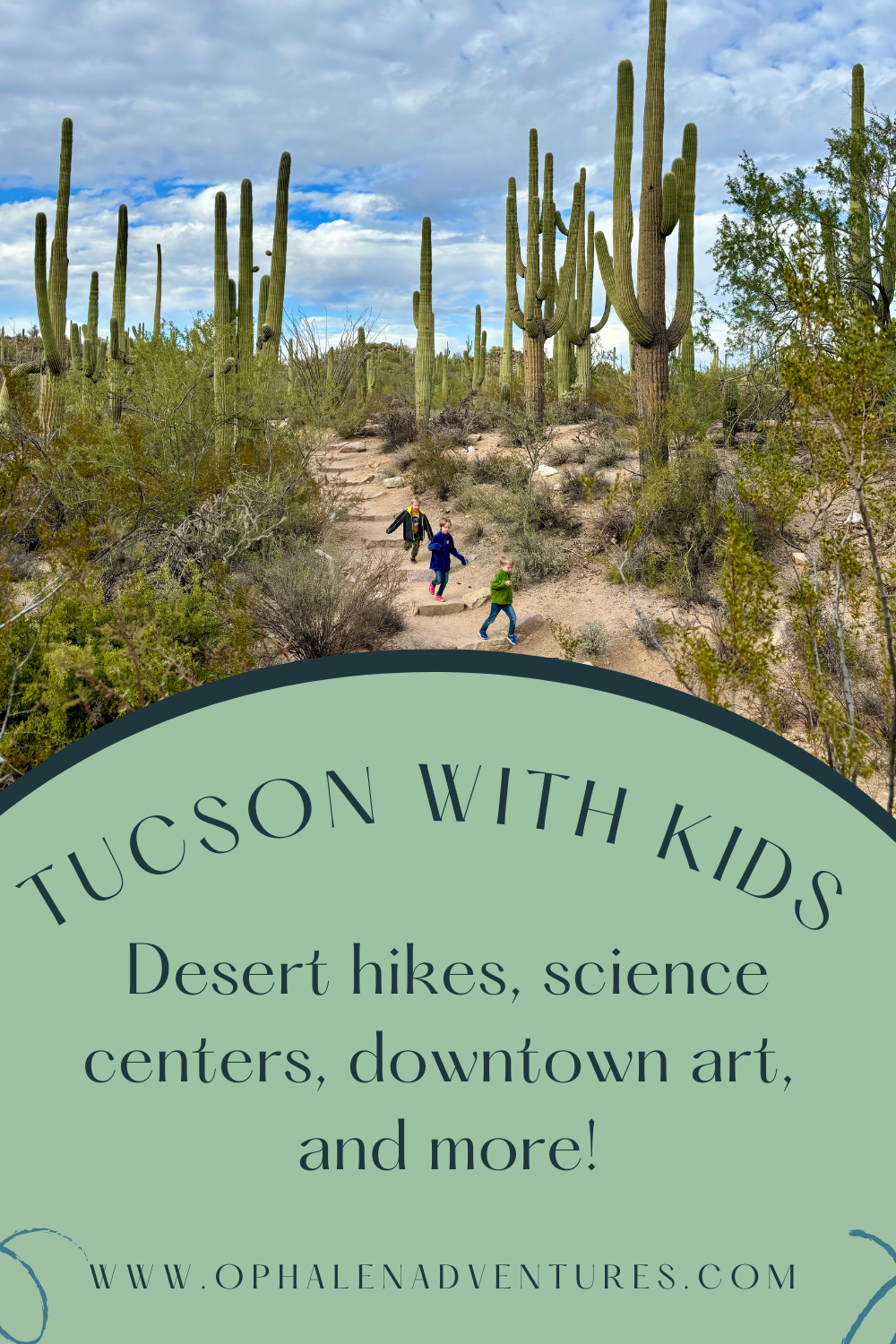
We loved Valley View Overlook trail in Saguaro National Park enough to visit it in both 2021 and 2024!
Saguaro National Park
If you’re into being outdoors in any way, it would be a crime to miss visiting Saguaro National Park. We’ve visited twice now, and I would happily go back again and again. Even if you’ve seen saguaro elsewhere, the sheer density of them in the park is pretty amazing. If you can, check out a ranger talk for some context about these magnificent cacti. I really enjoyed the one we attended because it gave me several different ways of observing what’s going on with the saguaro we see.
If you’re short on time, the Western part of the park is where it’s at. Our favorite hikes with kids include the Desert Discovery Nature trail, which is really just a short walk, but has gorgeous desert plants. And my absolute favorite is the Valley View Overlook trail, which is breathtaking at sunset and just before. Don’t miss the Signal Hill petroglyphs if you’re into those and doing the Junior Ranger program at the Visitors Center.
Sabino Canyon Hikes
Sabino Canyon has several options for gorgeous hikes, depending on how hard you want to hike. The parking areas fill up on weekends, so look into the shuttle service if you’re going at peak times. There’s a great Visitor Center here that you should check out if you have time!
Things to do in Tucson with Kids: Museums
Pima Air & Space Museum
The Pima Air & Space Museum is an absolute must if you have plane lovers in the family (maybe even if you don’t!). It’s the largest air and space museum I’ve ever been to, including around 300 planes on display. My plane lover was enthralled, and I even found some of the unique planes (like a vintage Air Force One) interesting. Because most of it is outside, it’s really little kid friendly.
Biosphere 2
Biosphere 2 is absolutely fascinating because it houses multiple biomes you can visit. Actual scientific research into the impact of climate change on these biomes is ongoing there, so you know they’re incredibly authentic. Visitors will be amazed at being immersed in these varied places. This museum isn’t cheap, but it is very cool.
Ignite Sign Art Museum
I absolutely love neon signs, and my kids think the bright colors are fun, too! This small museum is perfect for short attention spans and pretty pictures. Plus, they offer neon bending demonstrations on select days, which is an extra cool perk!
Flandrau Science Center
This science museum is small, but mighty! And we got in for free with our ASTC reciprocal membership, so definitely use that if you have it. There are some fun and interactive exhibits designed by ASU grad students, plus a tiny tide pool touch tank and an IMAX theater. If you’re only visiting one museum, I might not choose this one. But it’s a great activity for inclement weather days!
Children’s Museum Tucson
The Tucson children’s museum is an adorable and hands-on way to spend a cold (or super hot!) day. It’s interactive and fun for toddlers through elementary school, plus they often have free events so check their calendar! It can get crowded on weekend days, so perhaps best for a weekday if possible.
If you love museums with your kids, you might want to check out our list of U.S. favorites right here:
Download the FREE list of our favorite museums for kids
We’ve created a totally FREE PDF list of our favorite museums for kids that you can download right now by signing up for our newsletter.
Things to do in Tucson with Kids: Downtown & Nearby
Historic Pima County courthouse
El Presidio Plaza & Visitor’s Center
El Presidio Plaza is absolutely gorgeous and worth a stroll. There was even live music while we were there! Plus, our kids loved splashing their hands in the fountain. The historic courthouse building houses the city’s delightful visitor center. There is an interactive map of the area and several large displays about the city’s history and culture. The visitor center is definitely worth a short stop!
Downtown Street Art (Goddess of Agave)
Tucson has a surprising amount of street art downtown, and it’s worth a wander. There are a few beautiful pieces near El Presidio Plaza, but our favorites were the Goddess of Agave (North 7th avenue) and the pieces near it.
Ride the Streetcar
If you have kiddos who love riding trains or even just tired legs, consider a ride on the Tucson streetcar. The Sun Link streetcar is currently free, and riding is a great way to get an overview of downtown. Maybe you’ll even catch some street art from the windows!
A Splash Pad
It’s not surprising that a city this hot would specialize in splash pads to cool off, but these splash pads are amazing! Tucson has dozens of splash pads, but some family favorites are Heritage River Park and Brandi Fenton.
San Xavier del Bac Mission
The San Xavier del Bac Mission is a gorgeous church with beautiful grounds on the Tohono O’odham reservation. It’s free to enter and walk around, and it’s absolutely beautiful. Bonus: try some fry bread being sold in the parking lot! If you’re looking for how to talk to your kids about Indigenous people, you might be interested in this post.
Reid Park Zoo
Reid Park Zoo is a small zoo, with a ticket price that’s just right! Adult tickets are only $10.50, which is a fabulous admission price for a zoo. We didn’t visit this zoo ourselves, but I can’t possibly write about things to do in Tucson with kids and ignore the fact that there’s a perfectly kid-sized zoo there.
Tucson Botanical Gardens
If you or your kids love beautiful desert plants, this is the place for you! It’s large enough to be fascinating, but small enough to be accessible for families with small children.
Things to do in Tucson with Kids: Day Trips
Kitt Peak Observatory Tour
This was a surprisingly cool detour for us! It’s about an hour from where we were staying, but totally worth the drive. Not only was it free with our ASTC membership, but the tour of the telescope was really fascinating. The views from Kitt Peak were worth the trip, too! Be aware that toddlers might find it dull, but the adults sure didn’t! Our big kids were into it, too.
Mount Lemmon
Driving up to the top of Mount Lemmon takes some time, but the views are worth it! There are lots of hiking opportunities, but there are plenty of views straight from the overlooks. And snow-loving kiddos will be excited to play in the snow at the top in the winter! There’s also skiing for the winter sports inclined. Check out these web cams for snow updates.
Organ Pipe Cactus National Monument
Organ Pipe Cactus National Monument is another desert preserve where you can appreciate the beauty of the Sonoran desert. Lots of hiking opportunities exist there, or you can just enjoy the cacti from a scenic drive.
Nogales, Mexico
For families looking to day trip south of the border, Nogales, Mexico is an easy option for those with passports. Stroll the market and experience Restaurant Bar La Roca before heading home for the night. The easiest way to visit (paperwork wise!) is to park your car here and walk across the border.
I hope this post has been helpful in discovering things to do in Tucson with kids! If you’re taking a road trip with kids, I HIGHLY recommend a Yoto player for the journey. And if you’re wanting your kids to journal about your trip, consider this instant download from our store:
If you’ve ever wished for an easy way to capture what your kids learn as you travel, this is it! Forget other state worksheets that require boring, irrelevant details like the state flower. Let’s write about what we learned and experienced! This state worksheet digital product includes leveled worksheets for kids: one two page log…
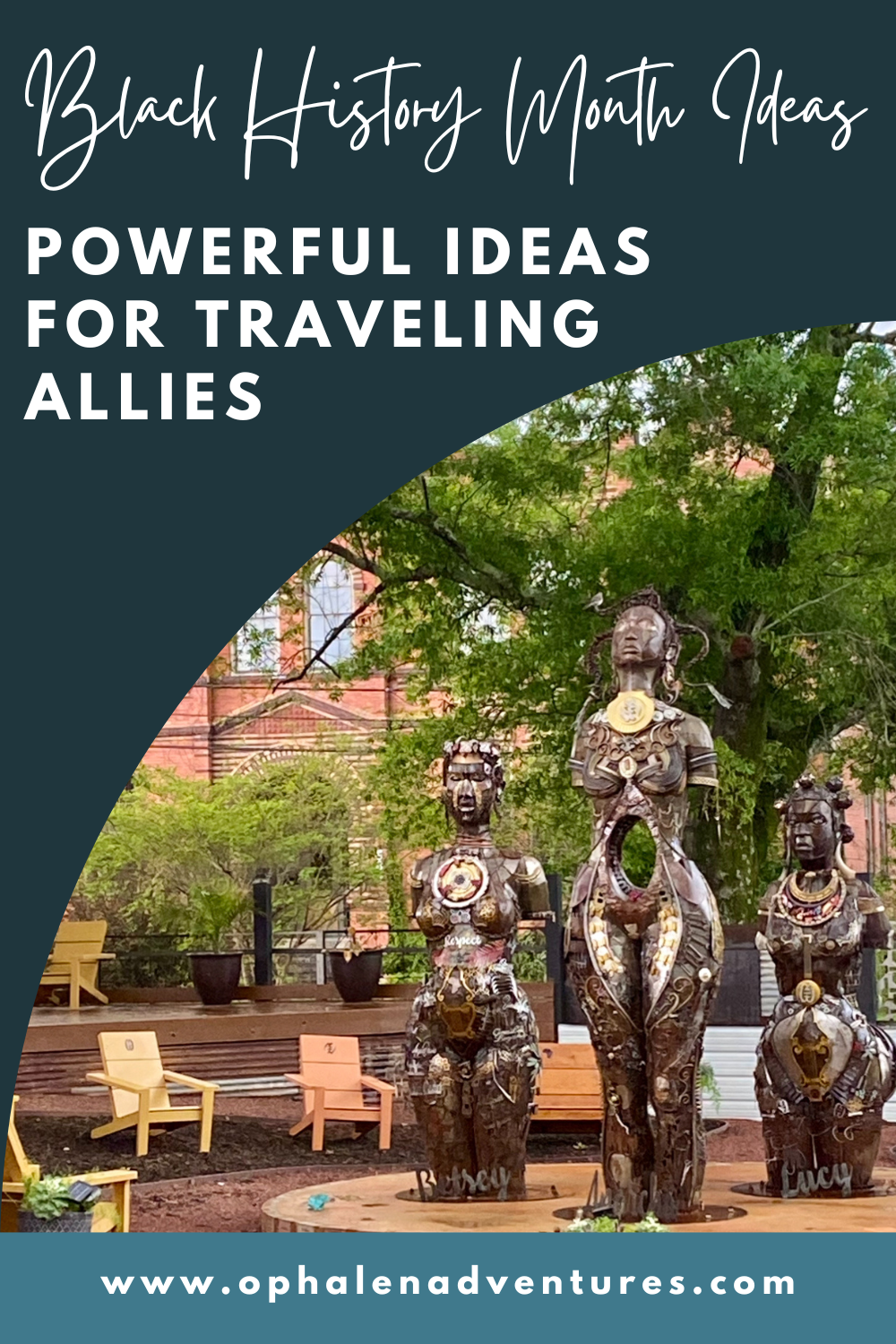
It’s Black History Month 2024, and learning about Black History is an important aspect of our homeschooling studies. One of my favorite things to write and share about is how we integrate our full time travel life with ideas about justice and helping to co-create a better future for everyone. I have several Black History Month ideas I’d love to share for allies who love to travel, families who are educating non-Black children (either homeschooled or supplementing a school education!), or anyone seeking to learn and expand their own ideas about equity.
Please note that I am not Black, I’m not an “expert,” and I will always defer to the Black community for how the non-Black community should observe Black History Month and what Black History Month resources are appropriate for us to use. I have spent about a decade (not long enough!) on my intentional anti-racist journey, and my hope in writing this is to share what I’ve learned and how I integrate it with those who are newer on their journeys and eager to learn.
Black History Month Ideas for Traveling Allies:
Shop Black Owned Businesses
One way we strive to “vote with our dollars” is by supporting Black-owned businesses as we travel (also note: we capitalize the word Black! Here’s why if you’re curious). There are some ways we look to find these businesses in new places, an easy one is to simply google something like “Black owned restaurants in Phoenix,” for example. Here are some other strategies I use:
Use Yelp to search for “Black owned” and look for the app’s badge that notes where businesses have self-reported as being Black owned
Try an app like Blapp that lists only Black owned businesses in the area
Follow travel influencers and news outlets and save Black owned businesses to try later (they’re often especially recommended during Black History Month!)
When presented with similar options for things like Airbnbs or RV parks, choose to spend money at the one with a Black entrepreneur at the heart
Ultimately, it may take a few more minutes to investigate what the options are for a Black owned business in the area you live in or are traveling to (and it’s more complicated because of…you guessed it…systemic racism!). But it’s absolutely the right thing to do to put in the extra effort to support these businesses as a non-Black family, and I think committing to supporting more Black owned businesses is one of my most important Black History Month ideas. Also, it’s no sacrifice because these businesses are totally rad. I mean, just check out these birthday cupcakes I got in North Carolina:
Black-owned bakery cupcakes in North Carolina
Take a Black History Themed Trip
I honestly don’t see enough non-Black families doing this in my opinion. We did a long weekend civil rights trip to Montgomery, Alabama with my homeschooling bestie, and it was an absolutely unforgettable experience. I plan to write about that trip in more detail soon, but in the meantime, here are some Black History trips I’d recommend:
Selma, Montgomery, and Tuskegee, Alabama
Nashville, Tennessee
Topeka, Kansas and Kansas City, Missouri
Washington D.C.
Harlem, New York
The Civil Rights Trail website has more ideas for locations to visit and even some suggested itineraries by state that are highly worth checking out! I wonder if more families don’t take trips like this because it seems boring or a “downer.” I’m here to tell you that you can be reverent, engaged, and respectful, and your family can still really enjoy themselves on a trip like this:
Civil rights trip to Montgomery
Experiencing the places where landmark civil rights struggles took place was at times serious and heartbreaking, but it was also so moving and profound that I would recommend it to any family who approaches it with a thoughtful heart. As someone who probably loves who travel (since you’re on my blog!), I hope a Black History trip gets added to your Black History Month ideas list.
Visit a Black History Museum on Other Trips
Perhaps a Black History trip isn’t in the cards this year (although you’ve saved it for next year!). The good news is that there are incredible hands-on Black History Month ideas for learning basically anywhere. A quick google search for the museums in your area might turn up some surprising local results. And if there aren’t any “Black History” specific museums, consider searching for “famous Black people from [your state]” and visiting their historical homes or places honoring their lives and contributions.
We had a fantastic time learning about legendary athlete Jesse Owens in his Alabama hometown. It was a quick day trip from where we were staying in Huntsville to renovate our RV. Any vacation or road trip you already have planned is an excellent opportunity to investigate and prioritize a stop to learn some new-to-you Black history. Either in your destination or as a quick stop along the way, taking the time will be a worthwhile endeavor, especially this month. I challenge you to find some Black History Month ideas in person near you in February!
Jesse Owens’ childhood home
Follow Black Travel Influencers on Social Media
The algorithm intentionally shows you people who are just like you, and that includes racially (ugh!). It takes intentionality to have a multicultural Instagram feed, but I highly, HIGHLY recommend it. If you love to follow travel influencers, consider replacing some of your lesser faves with some amazing Black travel influencers instead. Some of my faves are The Mom Trotter, Black Adventure Mom, The Traveling Child, Black Adventure Crew, and Mr Crim (who’s not strictly a “travel” influencer, but I found him because he taught me about St. Louis before we visited!).
Mitigate the Impact of Your Travel on Black Communities
This one is heavy and difficult, and there are no simple answers. But let’s take a deep breath and walk through it together for a moment. Just as we consider the impact we have on natural resources as we travel, we should be considering the impact our travel has on Black communities, as well. There are so many ways we can talk about this, but a few of the main ones that come to mind are gentrification, police violence, and climate impact.
Gentrification, where a neighborhood’s current residents are displaced by wealthier (and likely whiter) residents, is a real problem in Black neighborhoods. Airbnb and other short term rentals definitely exacerbated the problem, as well. That’s one of the many reasons why I sought to rent from Black owned Airbnbs when we used them, because at least the wealth was staying within the community more frequently that way. There’s no simple answer to the question “how do we stop gentrification?” but it’s a problem we should be aware of and talk about within the traveling community to avoid contributing more than we have to.
The other big elephant in the room when it comes to white folks traveling in historically Black neighborhoods is police violence. Nice white people (I’m including myself here!) were raised to think of police officers as community helpers and to call 911 in any emergency. And while I’m not saying to *never* call the police, I am advocating for white folks to be extremely, extremely careful about calling the police in any instance where non-white folks are present. Having lived in a predominantly Black neighborhood in Brooklyn, I can say that calling the police is a serious decision that many white people take way too lightly.
Finally, one of the most shocking statistics I read recently is that, because of the legacy of racist redlining, Black communities on average tend to be a full degree hotter than white communities. As we consider how to reduce our climate impact as travelers, we should keep in mind that the communities that suffer the most from climate change will not be the white ones. This section is definitely not the easiest on the Black History Month ideas list, but I feel it’s important enough to be worth saying in this post.
Black History Month Ideas for All Families
Listen, Watch & Read Black History Resources with Your Kids
Whether your children are homeschooled or not, it’s almost certain that their curriculum could use more Black History. Here are some Black History Month ideas to watch, listen to, and read.
John Lewis is a family hero after watching Good Trouble
Here are some resources we’ve loved watching together:
Good Trouble documentary about the Civil Rights Movement and John Lewis (**We watched together and paused about 20 minutes in for a brief discussion of the N word**)
There are just too many amazing books for me to list, but I’ve started a Black History Month ideas book list here with some of our favorites. Don’t forget to check out your local library for book recs, too! And I highly recommend following Stories of Color on Instagram for amazing kid book recommendations all year long.
Black History Month Ideas for Anyone
Pay Community Level Reparations
What are reparations? The NAACP calls for “a race-centered economic empowerment package for African Americans that builds generational wealth and accounts for not only slavery but the decades upon decades of economic pillaging.” So basically, money to pay back hundreds of years of stolen labor and subsequent racism that Black Americans have endured and which continue to set Black families behind.
So far, the political will isn’t there for nationwide reparations, but as individuals, we can do our own part. Consider a Black-led organization in your community to donate to or fundraise for this month. And remember that this isn’t charity, it’s owed.
A somber moment in Selma
Remember That Every Month is Black History Month.
Implement these ideas all year long, whether it’s February or not. Much like our family prioritizes learning Indigenous People’s history and culture whether it’s November or not, we also prioritize learning about the historical and current Black community all year, as well. We hope you do, too.
Disclaimer: Product links in this blog post may be Affiliate links, and I will earn a small commission for each purchase made through these links at no extra cost to you. Affiliate income helps fund our family travel and allows me to keep creating inspiring family travel content for you. I so appreciate when you use my links to make purchases you would have made anyway.
For more about how we travel and learn thoughtfully, check out these posts:
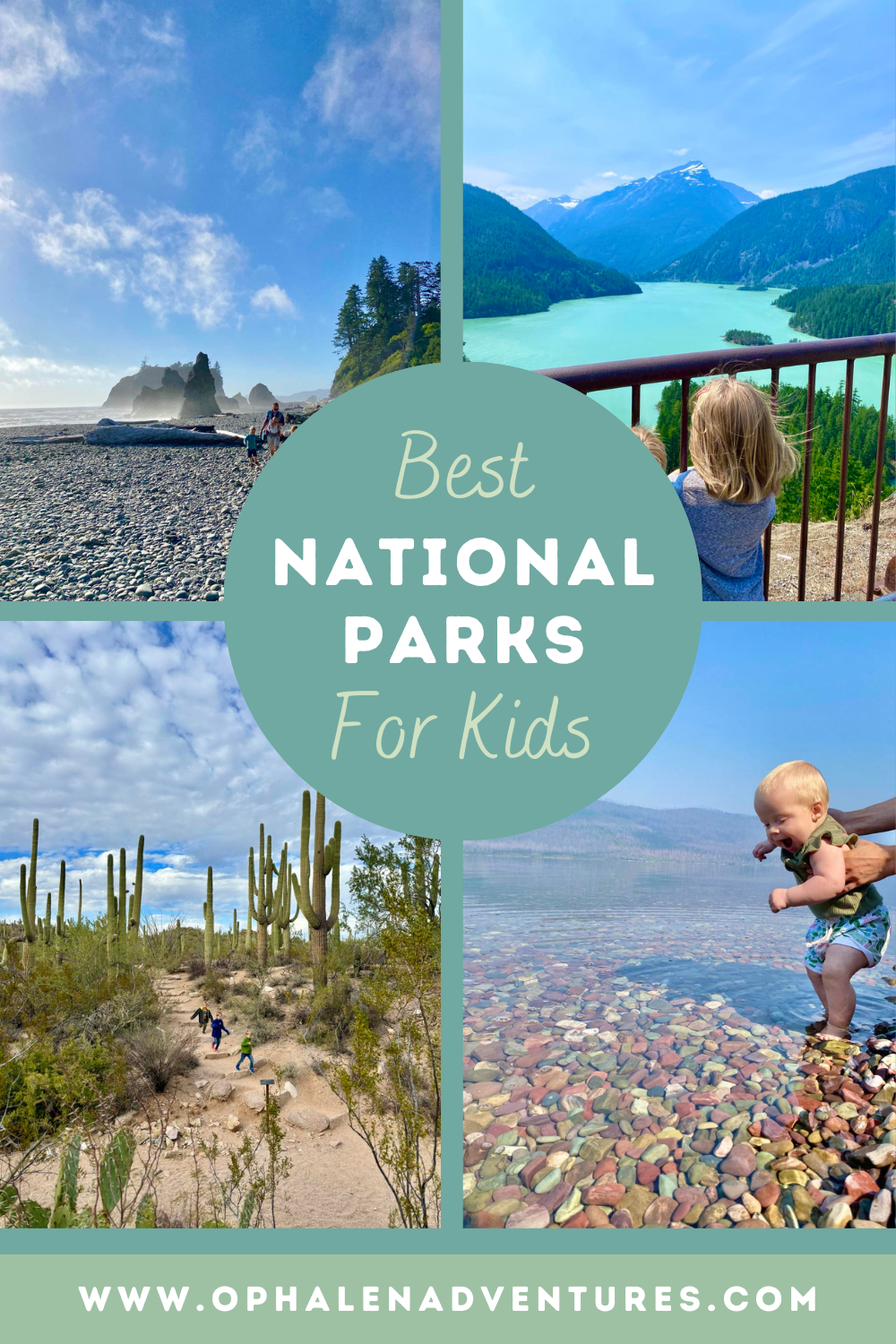
So far, we’ve been to over half of the country’s 63 national parks! So I wanted to share our thoughts on the best national parks for kids. But you know who knows more about the best national parks for kids than one full time travel family? Multiple full time travel families. No one knows more than a group of families who collectively have decades and decades of full time travel under their belts.
So today we’re sharing picks for the best national parks for kids from some of our favorite full time travel families! We’re so grateful to these families for sharing their wisdom with us today!
Before we get to the national parks we’re highlighting today — for those of you planning a bucket list adventure with your families, might I suggest checking out our travel journal worksheets for kids? It’ll give kids a place to record their favorite memories, what they learned, and to reflect on what is so different and interesting about the places you visit:
If you’ve ever wished for an easy way to capture what your kids learn as you travel, this is it! Forget other state worksheets that require boring, irrelevant details like the state flower. Let’s write about what we learned and experienced! This state worksheet digital product includes leveled worksheets for kids: one two page log…
Let’s jump in to the best national parks for kids now, shall we? There are some amazing gems, some excellent insider tips, and some gorgeous photos as a bonus!
Best National Parks for Kids: Glacier National Park
Julia of Roaming Nomads (@roaming.nomads) chose Glacier National Park as one of the best national parks for kids and had this to say:
“Our favorite National Park with kids is hands-down Glacier. We’ve been there at least 6 times now, with babies, toddlers, pre-schoolers, and the last time with pre-teens and every single time it’s a visit we all keep talking about. It’s accessible enough to enjoy while breastfeeding or managing toddler naps, but interesting enough to keep the older kids engaged and fascinated.
Our favorite memories are: • Swimming in and paddle boarding on Lake McDonald (don’t forget your watercraft launch permit!). It’s cold but worth it! • Watching a Grizzly Mom try to manage her three cubs at the side of the road (my most relatable animal interaction to date) on the East side of the park • Biking up the Going to the Sun Road when it was open still closed for cars in the spring. They open it up just for bikes for two or three weeks each year, depending on how fast their plowing is going. It was absolutely peaceful once you were past the day hikers, and great with the kids because we didn’t have to watch out for cars. • Eating Bear Claws in Polebridge in a surprise snow storm. Polebridge is always worth the detour, both for the scenery and the bakery. • Spontaneously deciding on a car camping trip out to Bowman Lake. It’s a long dirt road to get there, which means less people, more animals to watch and a peaceful sunrise on the lake.
And some tips on making the best out of your visit: Stock up before you go, because there’s not a lot of food to be found. Especially fresh stuff and especially if you’re headed to the east side of the park. If you’re driving up and down the Going to the Sun Road, get up early (to avoid the crowds and see the sunrise, and maybe even don’t require a vehicle permit), and going West to East is easier to drive. And don’t forget that your 4th-grader gets a free parks pass, even the homeschooled ones.”
Best National Parks for Kids: Yellowstone National Park
Ali Enerson of A Family Adventures (@a.family.adventures) chose Yellowstone National Park as one of the best national parks for kids and had this to say:
“Yellowstone National Park was high on our bucket list when we set out to RV full-time. Our goal is to make memories and spend more time with our kids while we’re traveling, so knowing there was this colorful, unique, smelly, other-worldly place not all that terribly far from where we lived in Wisconsin brought it toward the top. It’s a massive park, which can in some ways make it not super young kid friendly but we tackled it head on with a 8, 5 and 3 year old.
We were able to break it up into 5 days, our car was loaded with sticker puzzle books, car games, notebooks & pencils, mess free coloring pages, lunches and extra snacks in case the bison jam lasted hours. We looked at the map, broke the park into sections & prioritized. Then we chose the key features we wanted to visit in that section, knowing full well it’s impossible to see it all. We had a goal to hit our top 2-3 things for the day & considered anything else a bonus.
Some of our favorite things were the abundant wildlife viewing, making lunch along the river and just playing and relaxing away from crowded spots, our boondocking site, the boiling mud pots and the Grand Canyon of the Yellowstone. We think even if you only had 1 day in Yellowstone, it would be worth it! Don’t discount the popular and busy parks, they’re usually busy for a reason and with a little pre-planning and preparation it can work for your family!”
Best National Parks for Kids: Olympic National Park
Ryane Smith of Roaming with the Smiths (@roamingwiththesmiths) chose Olympic National Park as one of the best national parks for kids and had this to say:
“Our favorite national park for kids is Olympic National Park! Nestled in the heart of the Pacific Northwest, this park offers a captivating blend of diverse ecosystems that make it an ideal playground for kids. The highlights for our little explorers were the abundance of banana slugs and hidden creatures in the tide pools! The park’s combination of lush rainforests, towering mountains, and breathtaking coastline offer very unique terrains with a wide variety of species all in one place! Olympic National Park isn’t just a place; it’s a natural classroom, a playground, a wonderland, a place where kids roam, learn, play, and develop a deep connection with the incredible diversity of the environment around them!
‘In Olympic National Park, nature unfolds its grand story, and each tree, mountain, and tide pool narrates a chapter of wonder.’”
Best National Parks for Kids: Joshua Tree National Park
Heather Metcalf of The Wandering Herd chose Joshua Tree National Park as one of the best national parks for kids and had this to say:
“Joshua Tree National Park provides plenty of opportunities for a memorable experience when traveling with kids! Two favorite activities we did were: the mesmerizing sunrise at Cholla Cactus Gardens, and the enchanting Hidden Valley Trail. Consider starting your day off venturing to Cholla Cactus Gardens for a breathtaking sunrise show. The soft glow of the rising sun illuminates the desert landscape, casting a warm glow over the sea of cholla cacti. It’s a serene and awe-inspiring moment that will create lasting memories against the backdrop of this otherworldly desert environment. The Hidden Valley Trail offers a short, 1 mile flat, family-friendly loop hike. It allows kids to explore the landscape, climb boulders, and discover the unique Joshua Trees. Together, these offer a perfect blend of adventure and natural beauty for families to enjoy in a half day excursion to this must-see national park, just in time for an afternoon nap!”
Best National Parks for Kids: Acadia National Park
Jamie Schumacher of Letters From the Road Podcast chose Acadia National Park as one of the best national parks for kids and had this to say:
“Our family loved Acadia for its accessibility, variety of activities, and stunning views. While you can drive up Cadillac Mountain with reservations and a small-enough vehicle, we found the hike up the South Ridge Trail to be a beautiful use of a day. It’s about 7 miles round trip and easy enough for little hikers if you take plenty of snack breaks. We also enjoyed the Jordan Pond House for popovers and bike rides on the carriage trails. We stayed at Narrows Too with our Thousand Trails camping pass and enjoyed that we could use the bus system to get into the park and Bar Harbor. As an added bonus, Acadia is a more dog-friendly park, with dogs allowed on many of the hiking trails. This is one we can’t wait to get back to.”
Best National Parks for Kids: Sequoia & Kings Canyon National Parks
Mel Lahrs of Lahrs With Latitude (@lahrs.with.latitude) chose Sequoia & Kings Canyon National Parks as one of the best national parks for kids and had this to say:
“Sequoia and Kings Canyon National Parks stand out as one of our families top memories while traveling to the National Parks. These two parks are practically one as they are connected and you should definitely see both when you visit.
The parks are renowned for their towering sequoia trees, including the iconic General Sherman Tree, the largest living tree on Earth, providing children with a sense of awe and amazement as they marvel at these ancient giants.
One of my best memories is of our kids running through the downed trees on the trails in Grant Grove and identifying pine cones to find out that the smaller ones actually come from the largest trees. We were also very surprised by the beautiful Kings Canyon Scenic Byway. To learn more details about our adventures and plan your own trip, head to our blog here.”
Best National Parks for Kids: White Sands National Park
Leanna Kreifels of Simply Scenic (@simply.scenic) chose White Sands National Park as one of the best national parks for kids and had this to say:
“White Sands National Park is an absolute gem when it comes to family-friendly destinations. One of the highlights of our visit was watching our kids sled down the pristine white sand dunes, creating memories that will last a lifetime. Additionally, our daughter Kaylee participated in the Junior Ranger program as she does at every National Park we visit. This program not only sparked her curiosity but also taught our entire family about the unique ecosystem and history of the area. The park offers a variety of trails to explore, allowing us to immerse ourselves in the stunning landscapes and endless hills of sand. It truly is a place of unmatched beauty, making White Sands National Park an ideal destination for families seeking adventure and educational experiences all in one.”
Best National Parks for Kids: Saguaro National Park
Aimée Gading of Going with the Gadings (@goingwiththegadings) chose Saguaro National Park as one of the best national parks for kids and had this to say:
“As lovers of trees & lush forests, we weren’t sure what to expect when visiting the desert (kids and giant sharp plants with venomous/poisonous creatures don’t seem like they’d mix, right?) but we quickly fell in love with Saguaro National Park and the varied plants and animals that call it home. There are a few shorter trails we frequented with kids aged 3 and 6, such as the Valley View Overlook Trail & Desert Discovery Nature Trail, both in the Tucson Mountain District, and loved the evening ranger-led hike we did in the Rincon Mountain District.
We felt confident and safe in our knowledge of what to do should certain situations arise with wild life in the area after reviewing information on the NPS website & speaking to rangers. There is a majestic quality to the saguaro cacti we didn’t quite understand until basking in their presence & watching their shadows dance across the land as the sun set against the explosion of color that is a desert sunset. While Saguaro National Park is still in Tucson, a considerably large city, you’d be mistaken to think you can’t find quiet, one-on-one time to make priceless family memories there.”
Best National Parks for Kids: Capitol Reef National Park
Clarie Hamm of Rollin with the Handleys (@_rollinwiththehandleys) chose Capitol Reef National Park as one of the best national parks for kids and had this to say:
“Capitol Reef National Park was a park that wasn’t on our radar on “must visit NP’s” but once there, it quickly became one of our favorites! We were there in October and the park seemed empty. The weather was perfect, the trees were a gorgeous yellow color and there was still fruit on the trees. We had Mule Deer walk right up to us for a snack while we were picking pears and it was the highlight of our trip. Capitol Reef is known to be a desert oasis with the Fremont River running directly through it. If you follow the river in the park, you can pretty much always find a secluded spot away from everyone for the kids to play. We explored for the day and ended up at the river each afternoon for lunch and water time. “
Best National Parks for Kids: Kenai Fjords National Park
I couldn’t leave this post without a little input from the O’Phalen family, right? My pick for one of the best national parks for kids is Kenai Fjords National Park in Alaska. I found Kenai Fjords to be much more exciting than Denali National Park. This is a bit of a controversial opinion, but one I stand by. If you’re planning a trip to Alaska, don’t miss our post with everything I’ve written about our RV trip to Alaska.
Besides an adorable visitor center in downtown Seward, Alaska, Kenai Fjords National Park has two main offerings: glacier hiking and water adventures. You can find more information about the glacier hiking in our post about the best hikes in Alaska with kids. But the climb to the Harding Icefields was one of my favorite (if challenging!) days in Alaska. Teens and adults might love an ice climbing tour that looks difficult and magical. The photo above is from a kayaking tour I took to Bear Glacier Lagoon that was also absolutely breathtaking. Younger kids may be more wowed by a wildlife boat tour out in the ocean, where sea lions, otters, puffins, whales, and more are readily available to marvel at. I’m not sure how you beat a park that has glacier hikes, ice climbing, glacial lagoons, and abundant sea life.
Thank you SO much to all of our full time travel family friends who contributed to this post! Your wisdom and generosity is so much appreciated.
For more about how we travel with kids, check out these posts:
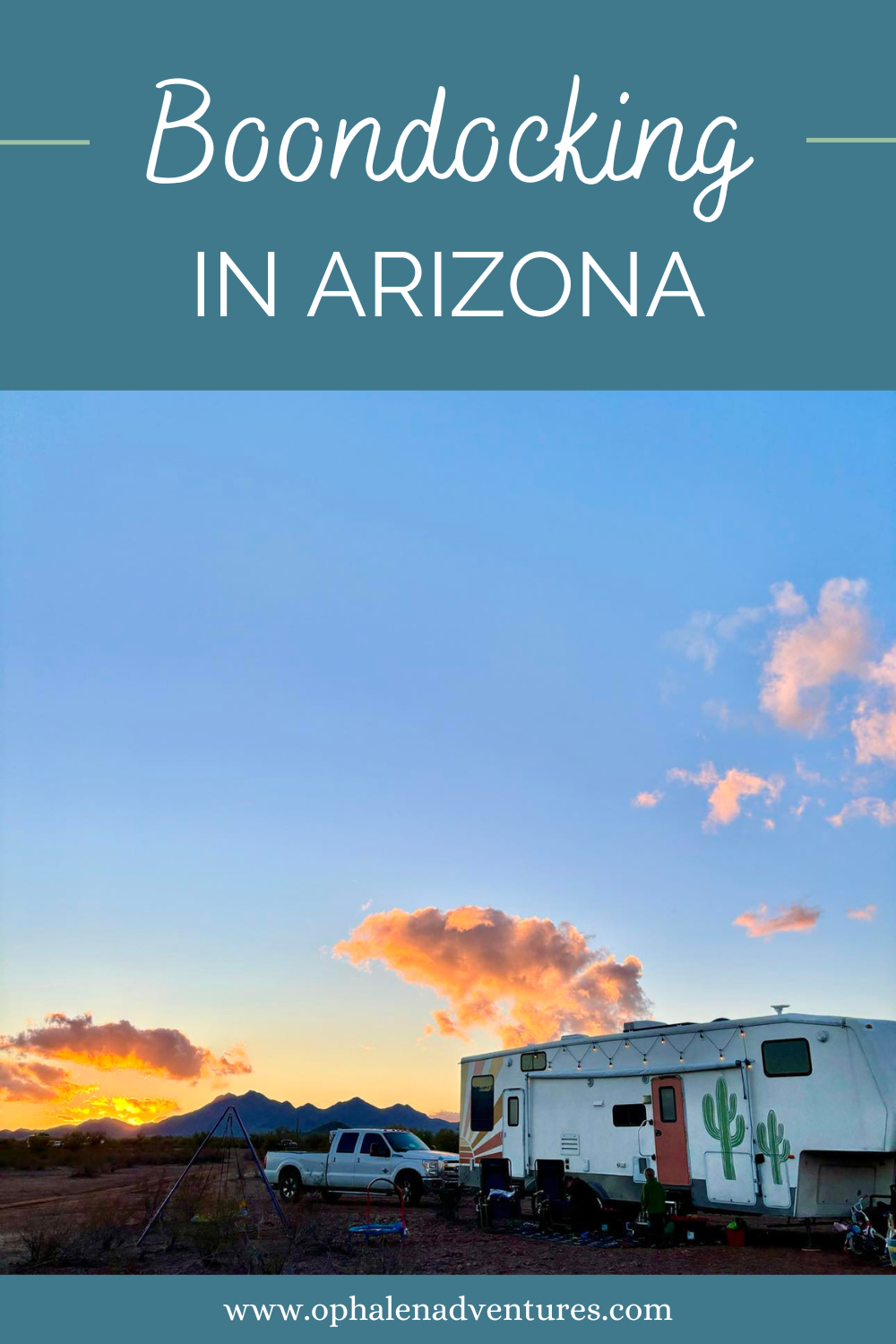
Boondocking in Arizona is a special experience. All together, we’ve spent almost five months living in Arizona as a full time travel family. While this is absolutely not an exhaustive list of all of the amazing places you can boondock in Arizona, it’s a good list of our favorite spots so far. I promise to come back and add more spots when we return and find more!
This 10-page guide will assist RVers in learning the basics of boondocking, or camping off-grid! We share everything we’ve learned as a family living off-grid and boondocking in our RV.
Okay, let’s get into these boondocking in Arizona spots now that I’ve convinced you!
Boondocking in Arizona: Sedona Area
Sedona BoondockingForest Road 525
I’m going to be candid and say that the glory days of Sedona boondocking are over. You used to be able to camp all along Forest Road 525, but recent restrictions mean that there are now only a few crowded spots. We felt that Surprise Dispersed at N 34°49’24.54″, W 111°54’22.44″ was the best option for big rigs, but it’s just a parking lot and quite crowded even in December. But if you’re visiting beautiful Sedona, this is (now) the spot for big rigs. Check out our ideas for Sedona with kids.
Boondocking in Arizona: Phoenix Area
Lake Pleasant Boondocking
There is a ton of state trust land northwest of Phoenix near Lake Pleasant. State trust land requires a $20 annual permit you can get online. This area at N 33°48’2.76″, W 112°14’18.72″ has cell service and lots of room for rigs of any size.
Peralta Road Dispersed Camping
Peralta Road dispersed camping is on the opposite side of Phoenix near Apache Junction. It’s also on state trust land and offers many big rig accessible pullouts along the road at N 33°20’57.78″, W 111°24’48.90″ and further in. We loved this spot because it’s both gorgeous and also right outside a shopping center for easy conveniences. Great cell service and sunsets. Don’t miss hiking a trail at the end of the road! The Peralta Road dispersed camping (boondocking) spot was one of our faves in the whole state!
Bonus: Lost Dutchman State Park Dry Camping
Lost Dutchman State Park isn’t technically boondocking of course, but we did dry camp there so I decided to include it on this list. This is a STUNNING place to camp, and Siphon Draw trail starts directly in the campground. Don’t miss it!
Boondocking in Arizona: Tucson Area
Pump Station Wash Boondocking
We loved Pump Station Wash outside of Tucson for the enormous sites and epic mountain sunsets. This spot at N 32°26’40.86″, W 111°22’19.44″ was perfect for big rigs and had great cell. Downside is that it’s far from everything except a dollar store and requires two-ish miles of very bumpy washboard roads to access. Worth it! Don’t take Silverbell Road to get there with a trailer, as there is a low weight limit bridge {EDIT: The bridge is being replaced in early 2025, check to see if it’s open now!}.
Boondocking in Arizona: Miscellaneous Areas
Black Canyon City Boondocking
This was a big BLM trailhead where we camped for over a week at N 34°3’8.64″, W 112°9’2.94″. The sunsets were gorgeous on the trail, and there was an amazing bonus for boondocking — a bathroom with running water! There’s not much nearby, but it was a good resting place.
Crown King Boondocking
There are unbelievable mountain range views on Crown King BLM land, including this spot at N 34°17’27.06″, W 112°10’32.64″. The downside is a long, bumpy road to access it, so it’s not a great base for sightseeing. But if you’re looking for solitude and views, wowza! Cell service was decent.
I hope you try out one of these amazing boondocking in Arizona locations! Come back and let me know if you do.
Disclaimer: Product links in this blog post may be Affiliate links, and I will earn a small commission for each purchase made through these links at no extra cost to you. Affiliate income helps fund our family travel and allows me to keep creating inspiring family travel content for you. I so appreciate when you use my links to make purchases you would have made anyway.
For more boondocking locations and tips, check out these posts:
It’s the tiniest room in our whole tiny house, but the renovation breakdown wouldn’t be complete without talking about our RV bathroom renovation!
I’ll list everything we used, and I’ll break it down by section. But first, let’s start with the mood board, shall we? I always recommend creating a mood board for any renovation project. It helps keep you focused and makes the whole thing so cohesive. If creating one feels overwhelming, I’d LOVE to help you. Click here to book.
The mood board for the bathroom is the exact same mood board as the one for the bedroom. That’s because the bathroom really does feel like a part of the bedroom, especially with the shower actually being outside the door and IN the bedroom.
Bedroom mood board
One thing I think is especially important to consider in RV renovations is how all of the rooms will look together. Because the space is so small, it’s likely that you’ll see multiple rooms from the same spot.
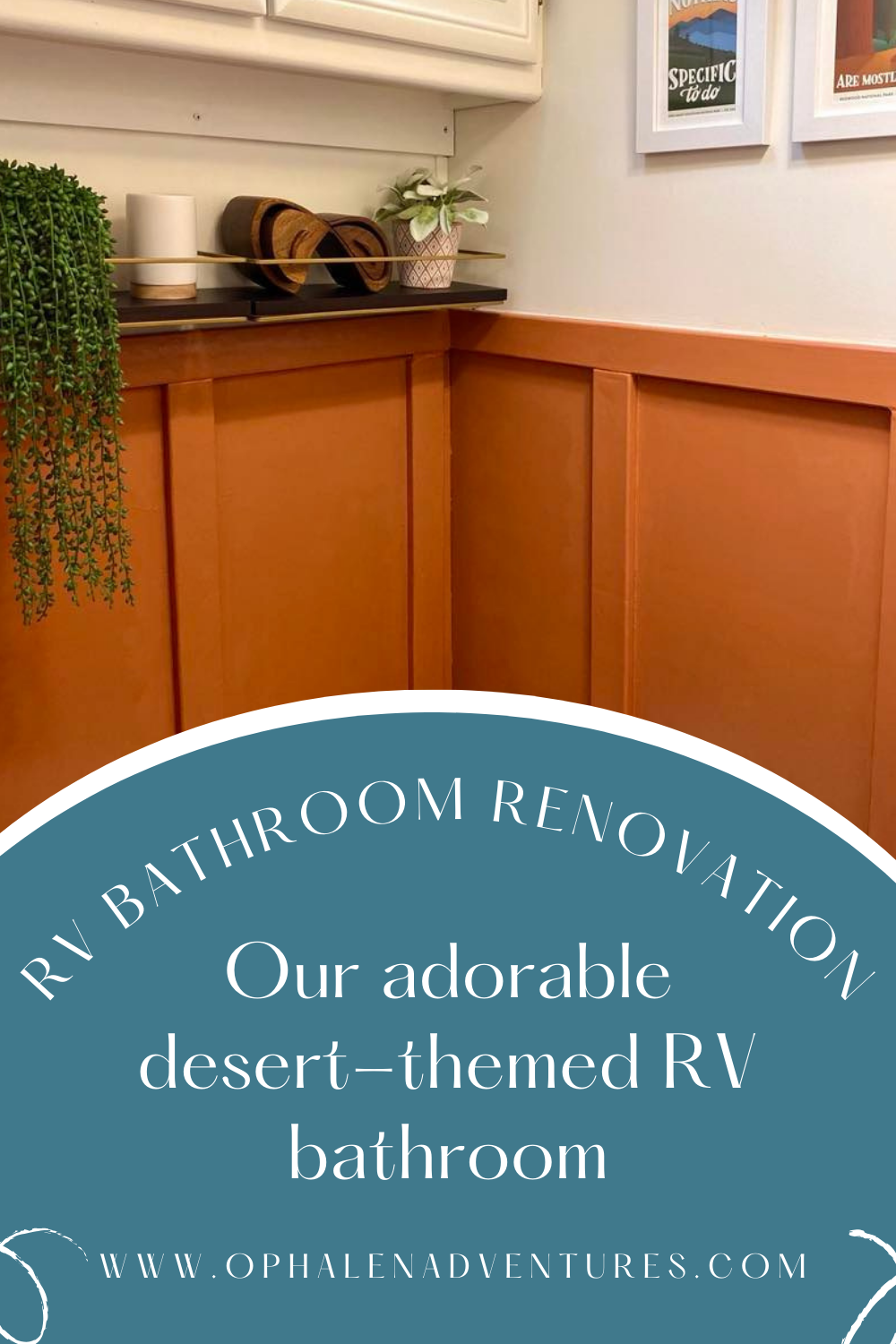
The star of the show in this RV bathroom renovation was the addition of orange faux board and batten, which was a particular challenge with flimsy RV walls. But I really love how it turned out, even though I’m no carpenter and it’s definitely imperfect.
RV Bathroom Renovation: Colors
Paint colors: Upper walls are Behr Swiss Coffee, lower walls are Behr Glazed Pot
Primer and paint details: Everything was primed with Kilz adhesion primer and painted with Behr semi-gloss interior paint
In our RV, the shower is outside of the toilet closet, so I included shower details in the bedroom post.
RV Bathroom Renovation: Summary
The board and batten was by far the hardest part of our RV bathroom renovation. I used 1″ thick boards, and if I ever did it again, I would definitely use more lightweight material. Getting those pieces to adhere firmly to a flimsy RV wall was no fun, but it was worth it!
The other major project was replacing the toilet, which was necessary in our rig because of its age. But I’d highly recommend it for any renovation because these toilets just don’t last and having a new one has been nice for peace of mind. Replacing the toilet was a blessedly easy project.
The Subpar Parks prints crack me up and are a true delight. I also really enjoy the details found in the fringe on the overhead light and the sun on the exterior door. Plus, the bold orange is so fun in that tiny room. I was worried it would be too much, but I think it’s just right in a room that doesn’t have much else going on.
Disclaimer: Product links in this blog post may be Affiliate links, and I will earn a small commission for each purchase made through these links at no extra cost to you. Affiliate income helps fund our family travel and allows me to keep creating inspiring family travel content for you. I so appreciate when you use my links to make purchases you would have made anyway.
For more about how we renovated our 2007 Keystone Raptor into an adorable tiny home, visit our main renovation page or check out these posts:
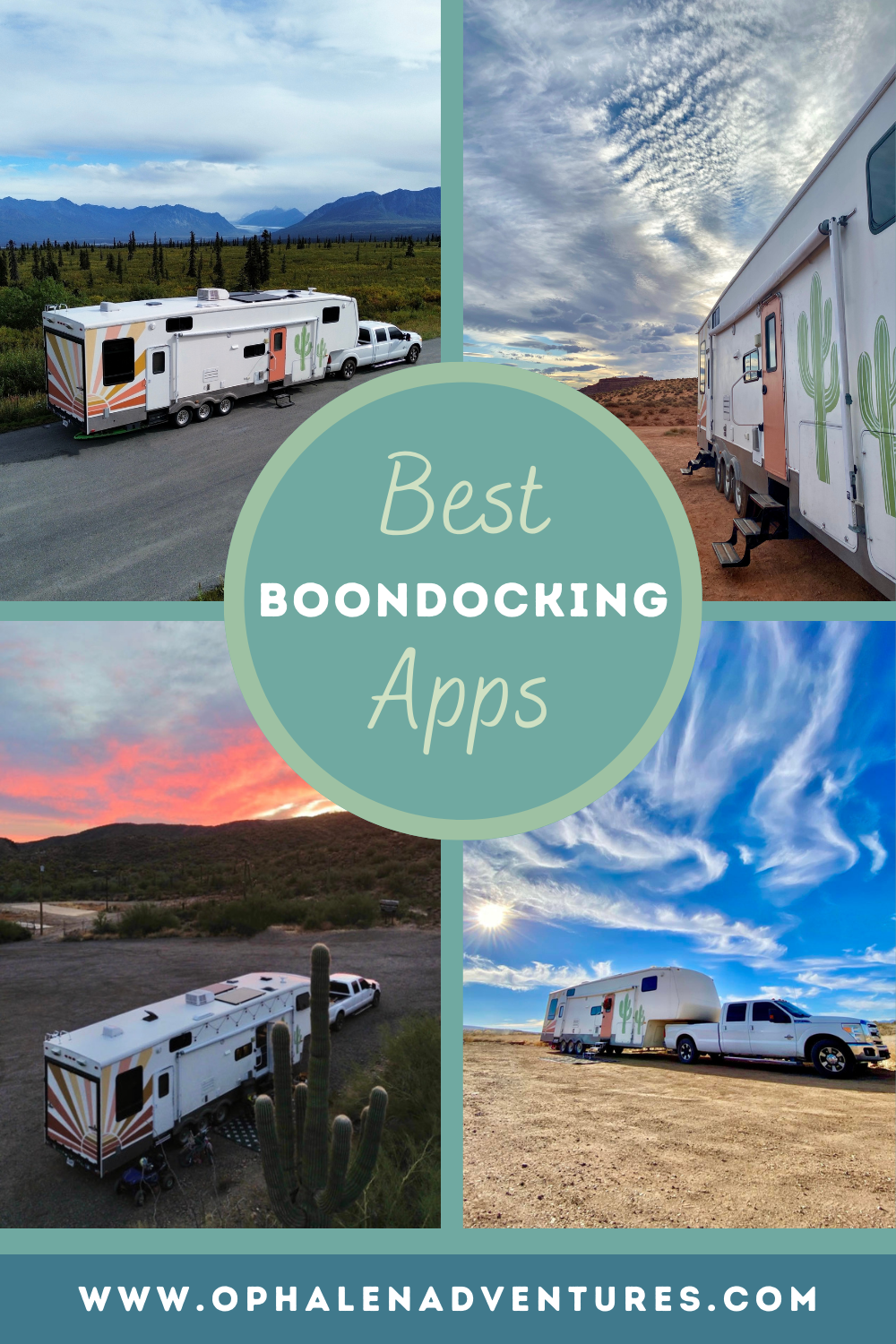
Like all millennials, I rely on apps to organize my life, and boondocking is no exception! I’ve talked a lot about how we added solar panels to our RV’s roof last year so that we can spend more time off-grid. In 2023, we spent over 100 nights boondocking with our toy hauler, and I anticipate that number will be even higher in 2024. So obviously we now have strong feelings about the best boondocking apps.
My favorite reasons for boondocking are:
Absolutely unbelievable views right from my couch
Tons of room for our three kids to roam and act like kids without RV park rules limiting their play
Saving tons of money by paying $0 in rent
If you’re interested in learning how to boondock and want to download everything I know about it just like we were friends sitting around a campfire together, I’ve got you:
This 10-page guide will assist RVers in learning the basics of boondocking, or camping off-grid! We share everything we’ve learned as a family living off-grid and boondocking in our RV.
Okay, so maybe I’ve convinced you that you should try boondocking. But you may be wondering how we find places to park our RV? Well, there’s an app for that! A few, actually. Here are our picks for the best boondocking apps.
Best Boondocking Apps
iOverlander
iOverlander is the absolute best boondocking app in my opinion. It’s definitely the one we use the most. iOverlander wins for me because of the sheer number of boondocking locations that the app lists. It’s definitely the most comprehensive database of free parking spots that I’ve found. It also tops my list of best boondocking apps because it lists other crucial services that boondockers need. We use iOverlander to find hot showers, laundromats, propane refills, dump stations, potable water fills, and more.
The only thing to note is that a lot of the spots are catered towards van life dwellers or stealth campers. We are not fitting in tiny spots or flying under the rader with our 37′ fifth wheel. The app does have a checkbox to note if a spot is viable for big rig RVs like ours, but there isn’t a way to filter by that feature. It’s worth it, but that’s my only complaint.
Campendium
{Update May 2024: Campendium is being rolled into the paid Roadtrippers app, which I haven’t tested yet. I’ll keep you updated on whether it’s worth trying, but this is disappointing regardless}
Campendium is another one of the best boondocking apps that we use frequently. I like it because it’s RV-centric, so I feel confident that we’ll fit in most of the spots I find there. I also use it to cross-reference spots I find on iOverlander for that reason. It also shines because it names each spot with a unique name, making it easy for RV folks to share locations like “Lone Mesa Dispersed,” unlike iOverlander, which allows users to set the location name (sometimes randomly). Finally, I really appreciate that Campendium prompts users to review the cell service at each location by carrier. That information is really useful for those of us who are full time RVers working remotely. This is a free app, although it has a paid version we’ve yet to use.
Harvest Hosts
Harvest Hosts is the best boondocking app for stays that are also an experience. I’ve written a whole Harvest Hosts review, but the short version is that this is a subscription service that offers one night stays at gorgeous locations like farms, vineyards, and breweries. Harvest Hosts shines as an overnight stay as you’re traveling somewhere else (not sitting down in one location for an extended time period). It also allows us to experience fun excursions like farm or vineyard tours right where we’re camped.
Boondockers Welcome
Boondockers Welcome is another paid subscription that rounds out this list of the best boondocking apps. Harvest Hosts and Boondockers Welcome are partner programs, but they differ slightly in what they offer. Boondockers Welcome hosts are regular folks who offer up places to park in places like driveways and big parking lots. Unlike Harvest Hosts, there’s no “experience” offered and many hosts offer stays of one to five nights. And 75% of hosts offer some form of hookups, unlike Harvest Hosts where hookups are rare.
Disclaimer: Product links in this blog post may be Affiliate links, and I will earn a small commission for each purchase made through these links at no extra cost to you. Affiliate income helps fund our family travel and allows me to keep creating inspiring family travel content for you. I so appreciate when you use my links to make purchases you would have made anyway.
For more off-grid tips and tricks, check out these posts:
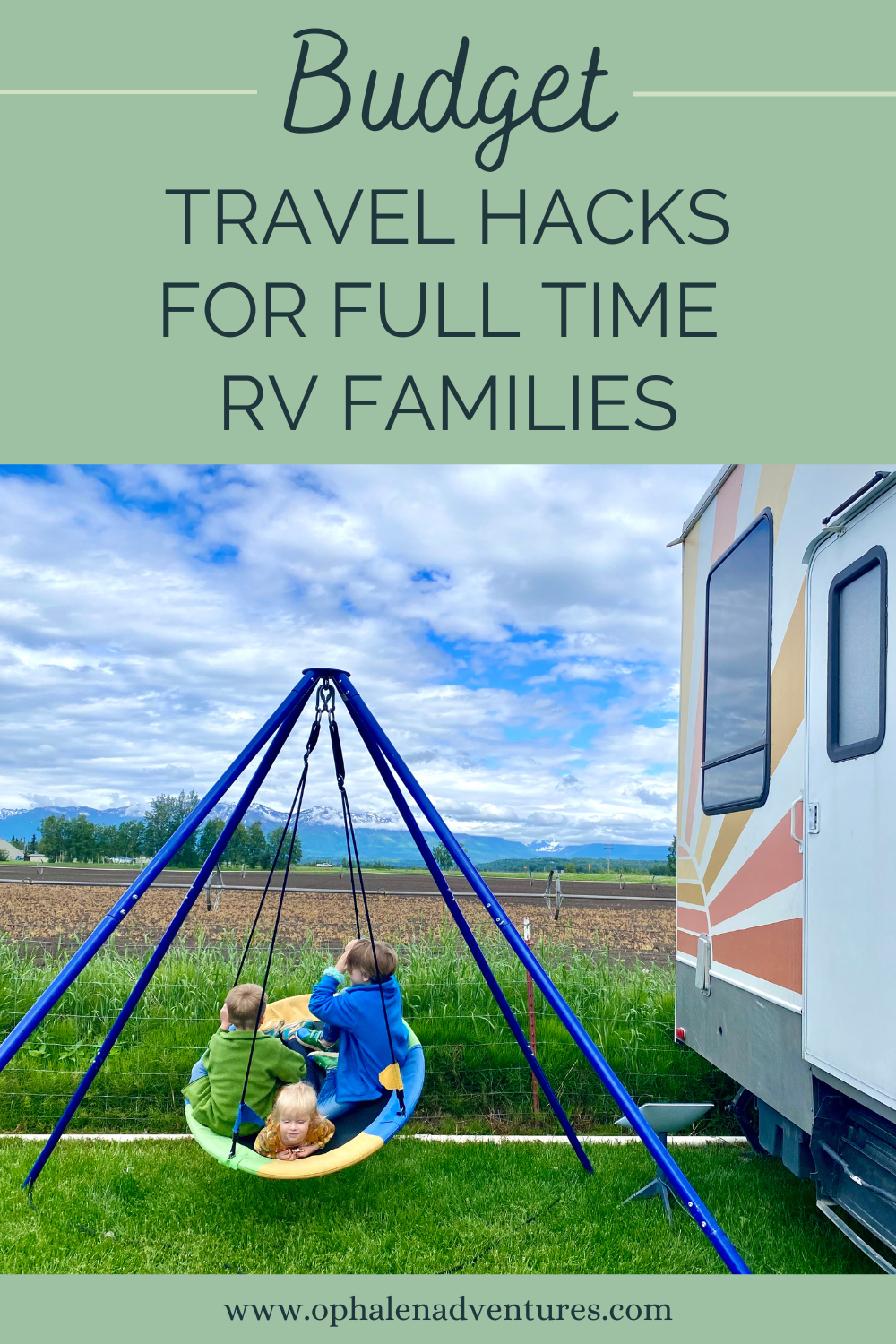
We’ve always been one of those thrifty full time RV families. But a hard financial year has had us getting even more creative with our money-saving strategies for RV life!
Here are some of the ways we keep expenses low while still traveling the continent:
How We Travel: Frugal Full Time RV Families
First up: how we travel. Where you stay and how much gas you use are some of the biggest expenses for full time RV families. So here are a few of our budget-saving hacks.
Monthly RV Park Stays
Daily RV park rates can be exhorbitant, and they probably make sense for weekend trips or the occasional week-long vacation. But for full time RV families, those nightly rates can really add up. Most RV parks offer monthly rates that are so much cheaper! Sometimes it’s even cheaper to stay for a month than for just two weeks, which is wild. We love using Campspot to book RV parks because the monthly discount often calculates right there for you as you book! But if a campground isn’t on Campspot, don’t hesitate to call the park to ask someone directly about the monthly rate. Pay attention to whether they make monthly guests pay for electric on top of their site! I’ve got a blog post with some affordable RV parks, too.
Travel Slower
It’s tempting to try to see it all in a short amount of time. But those of us who have been on the road for awhile have learned how much you miss when you only stay places for a few days at a time. Moving slower means a way more immersive experience in every place. Bonus points: saving on gas. This is not to say we don’t have seasons where we travel quickly (see: our Alaska trip!), but we try to balance it out with seasons where we slowly explore a region for a whole season.
Learn to Boondock
Our first year RVing, we never were off-grid for more than two days in a row. Part of that was not having the right set up, and part of it was being totally intimidated by learning how to conserve water. And yes, solar is an upfront cost. We spent $4,000 on outfitting our rig with the bare minimum in solar, but being off-grid pays for itself SO quickly. We’ve spent almost six months combined not paying for RV parks, and we have saved way more than we spent on the solar install. This is what we installed, if you’re curious.
If you’re boondocking curious, but overwhelmed with everything you need to know to get started, I’ve got you:
This 10-page guide will assist RVers in learning the basics of boondocking, or camping off-grid! We share everything we’ve learned as a family living off-grid and boondocking in our RV.
We held off on purchasing a Thousand Trails membership for a long time because we didn’t want to spend thousands of dollars on a membership we weren’t sure we’d use. I also didn’t want to plan our travels only around Thousand Trails locations. BUT we finally purchased a basic camping pass for the Southwest region this year, and it paid for itself within two weeks. The basic camping pass is around $500 for a year, which is a great deal if you are spending more than a few weeks near a Thousand Trails location. Use this link and get $100 off joining. Bonus: lots of full time RV families go in and out of TT locations, and you will very likely make some friends!
Harvest Hosts
Harvest Hosts is another camping membership we use and love. I wrote a whole review of the program. You do have to spend money at each stop to support the location, so it’s not a totally free stay like Thousand Trails. But I often stay places where we can spend money on something like local dairy products that we would have needed to eat anyways.
Visit Places Off Season
Finally, another money-saving hack for full time RV families with flexibility is to visit popular destinations outside of peak season. RV parks and other outings are often significantly cheaper, and I personally enjoy shoulder seasons in many destinations even more. Bonus: crowded destinations are often much less crowded!
What We Do: Frugal Full Time RV Families
Another big expenditure for adventurous traveling families is activities and excursions. Here are some of the ways we cut costs on the amazing things we do and see.
Hike More
Hiking is gorgeous and (mostly) free. It’s a unique way to see a place, and other than some light gear and the occasional trailhead fee, it costs nothing. We really increased the amount of hiking we did this year for all of these reasons. No regrets. If you need help learning how to get kids hiking, I’ve got you!
Free or Cheap Museums
Museum visits can get pricey for a family fast. But there are lots of ways to nab free or cheap museum tickets (don’t miss our favorite museums for kids!). First, consider a museum membership with reciprocity through a program like ASTC, ACM, or AZA. Second, check museum websites for free or discounted community days. Most major museums have a day or half day a month that’s free admission. Third, check out what museum passes the local library offers. Many libraries have a limited number of free museum passes to hand out each month through a culture pass type program. If you need a local library card as you travel, check out my post with 200+ non-resident library card policies.
Library Classes
Speaking of libraries, they often offer a whole host of classes you can take for free! Check the library event calendar; we’ve taken some pretty sweet library classes with local artists this way. And seriously, don’t miss my library card post.
Homeschooler Discounts
Depending on where you are, many institutions and organizations will offer homeschoolers a discount. Generally, these will be listed as “teacher discounts,” and you’ll have to inquire about whether homeschool teachers count. But they often do! Museums can be up to 50% off, and even places like Goodwill have given me a homeschool teacher discount. It’s worth asking!
America the Beautiful Pass
The National Park Service offers an annual card that gets you into all 63 National Parks and 400+ National Park Sites for free. It’s called the America the Beautiful pass, and it’s only $80 for the year. Considering driving into many of the parks costs $30, this is a steal if you travel. Plus, families with 4th graders get a free pass!
Hobbies That Keep On Giving
This year, we really leaned into more hobbies that are either free or require an upfront purchase and then are free. For us, this looked like kayaking and drone videography, but there are all kinds of other options that offer unique ways to experience a place. These might include geocaching, fishing, mountain biking, and more.
Gifting Expensive Experiences
For the holidays this year, we leaned into special experiences as gifts instead of more “things.” Our kids got money for expensive outings they wanted to do like Lizard Camp and Legoland. If you’re looking for more RV gift ideas, I have lists for both kids and adults.
Regular Expenses: Frugal Full Time RV Families
Cook More
As tempting as it is to eat out all of the time, that cost adds up fast. We cook at home instead of eating out 99% of the time, saving restaurant experiences for places that are really unique.
Cheap(ish) Groceries
These days, even groceries aren’t cheap. So we do our best to plan ahead by shopping at Aldi when we can and stocking up. I also look ahead on our itinerary and shop in bulk before visiting a tiny town. Those rural grocery stores will leave your food budget for dead.
Washer & Dryer
When we have full hookups, we take full advantage of our washer and dryer. I debated the expense of putting them in when we were renovating, but they cost less than $500 together. Laundry is $20-30 a week, so those babies paid for themselves quickly. The ones we have are on my renovation list.
Secondhand Gear
Because we were city people without a yard, we had absolutely no outdoor gear unlike some other full time RV families. Let’s just say that we had a lot of stuff to buy to become outdoorsy people. We’ve tried to buy the gear we need secondhand when possible! Facebook marketplace, Craigslist, thrift stores, and Buy Nothing groups have all been great for this.
Downsize Storage
When we first left Brooklyn, we thought we were leaving for just the summer. I know, hilarious in retrospect. But it meant that we kept most of our belongings in a massive NYC storage unit, intending to come back quickly. When we bought the RV and decided this was a medium to long term thing, we went back home and gave away almost everything that was in storage. We now have the smallest unit you can get with just some sentimental items. Downsizing and moving our things to a lower cost of living area saved us over $100 a month in storage fees. Maybe you have someone your items could stay with to save you even more. Just saying, the less money you can give to the storage unit gods, the better.
I hope these money-saving tips for full time RV families have been helpful! If you have more hacks, please leave them in the comments!
Disclaimer: Product links in this blog post may be Affiliate links, and I will earn a small commission for each purchase made through these links at no extra cost to you. Affiliate income helps fund our family travel and allows me to keep creating inspiring family travel content for you. I so appreciate when you use my links to make purchases you would have made anyway.
For more on how us full time RV families live, check out these posts:
If you’re looking for Alaska vacation ideas, you’ve come to the right place! This guide features 20+ pages of what we learned throughout a summer RVing Alaska with Kids.
Portage is a great base for nearby hiking and paddling (and even day tripping through the tunnel into Whittier!). I even recommend it as a stop on my 7 day Alaska itinerary. There are two nice spots here. The first can be found on Portage Glacier Road at N 60°47’33.30″, W 148°54’1.38″. This spot is right on a pond and has room for a few rigs. It does fill up though, and we weren’t able to fit. There’s also zero cell service here. Our backup spot was Portage Valley Parking at N 60°51’12.36″, W 149°0’23.46″. This spot is a big parking lot right off of the Seward Highway. It’s noisy during the day, but plenty quiet at night. Super level and good cell service. We stayed for several days and loved the views and easy parking!
Eagle River Boondocking
Eagle River is a great boondocking location if you’re looking to be convenient to Anchorage. This location is the North Fork Eagle River boat launch and a big highway pullout on the way to the Eagle River Nature Center at N 61°16’6.54″, W 149°20’54.06″. Cell service on this road is not good.
Palmer Boondocking
Palmer is a place we returned to several times for its pastoral prettiness and convenient location. We stayed at several spots here, including an RV park (if you want info on the best RV park, it’s in my Alaska ebook!). Here are two Palmer boondocking sites I’d recommend. The first is just outside Palmer called Slipper Lake at N 61°43’57.00″, W 148°55’19.98″. The location is convenient and the lake is pretty with swans swimming on it. The cell service is two bars, the road in is rough for .25 miles, and there is shooting range noise during the day. The second spot is on the Matanuska River at N 61°30’12.30″, W 149°1’40.32″. It’s a very pretty spot with decent cell service, but scout ahead. If the river is running too high, there isn’t enough sandbar to camp on.
Glacier View Boondocking
This was one of my favorite parking spots in all of Alaska. We stayed here twice for the gorgeous glacier view and ease of parking. It’s a highway pulloff on the Glenn highway at N 61°56’51.00″, W 147°8’49.98″. It would make a good base for a Matanuska Glacier tour, but it’s not near much else. Luckily the view is an experience in itself.
Boondocking in Glacier View
Talkeetna / Denali State Park Boondocking
This spot is between Talkeetna and Denali State Park, and it made a great jumping off point for visiting both. It’s the old East West Express Trail at N 62°24’43.20″, W 150°15’21.12″. It’s an overgrown scenic viewpoint with plenty of room for big rigs. We also were basically alone back there in the woods for a few days with usable cell service.
Outside Denali National Park Boondocking
This spot is an excellent spot for boondocking just outside of Denali National Park. It’s a pullout on the Parks highway at N 63°32’25.50″, W 148°48’21.72″. With how far in advance the park camping books up, this can be a great spot for last-minute planners.
Valdez Boondocking
Valdez is a stunning destination that shouldn’t be missed (I’ve written about what to do there!). The city has cracked down on boondocking recently, but I have two spots to recommend. The first is right outside of town on the riverbed at N 61°4’37.86″, W 146°10’45.30″. Scout ahead because the road in is rough and water levels make a big difference in accessibility, but cell service is good. It’s gorgeous, too. The second location is half an hour outside of town in Thompson Pass at N 61°9’6.60″, W 145°43’37.26″. It’s got gorgeous glacier and mountain views, plus plenty of room. No cell service, though.
Boondocking in Alaska: Kenai Peninsula
Moose Pass Boondocking
Moose Pass was such a favorite boondocking spot that it topped our list of favorite camping spots in Alaska! This Trail Lake dirt parking lot is at N 60°30’10.74″, W 149°22’6.78″. Cell service is decent here and lots of room. Its biggest perk is being able to kayak right from the yard and watch float planes landing. It also makes a decent base for Seward if you don’t mind driving in.
Kayaking on Trail Lake
Exit Glacier Road Boondocking
The closest boondocking to Seward is on Exit Glacier Road. There are various spots on the riverbed for smaller rigs, but big rigs are best served by the roadside pullout at N 60°10’12.60″, W 149°30’47.28″. Exit Glacier Road is the perfect jumping off point for hiking to the Harding Icefields, but there’s no cell service on the road.
Skilak Lake Boondocking
Lower Skilak Lake has a state park style dry campground that’s free at N 60°28’15.84″, W 150°28’5.94″. It’s absolutely stunning, and you can launch a kayak right from your site. Full disclosure: most sites are not sized for big rigs, but it was empty enough that we could shove our 37′ fifth wheel halfway into a spot and not be in anyone’s way. No cell service and a bumpy road to get here, but a great place to break up the trip between Homer and Seward.
Outside Homer Boondocking
Homer has also made boondocking in town impossible, but you can camp directly on the beach at Whiskey Gulch at N 59°49’52.02″, W 151°49’19.80″. Scout ahead to see if you’re comfortable with the steep hill coming out. If you are, it’s a beautiful spot and accessible to Homer sightseeing.
Boondocking in Alaska: Southcentral Alaska
Haines Boondocking
We fell in love with this sweet little boondocking spot right outside of Haines. It’s just a roadside pulloff, but with views from the couch of the ocean! It’s at N 59°15’30.72″, W 135°26’26.22″. We had slow cell service here, but could drive quickly into town or walk right down to the beach. It was also right near the ferry so we had easy access when we ferried to Skagway! Catching the northern lights here multiple nights didn’t hurt either.
Northern lights in Haines
Skagway Boondocking
There’s no big rig accessible boondocking in Skagway, BUT you can stay at Garden City RV with no hookups for just $10 a night. Its easy location made this a no-brainer for us. Bonus for super cheap, hot showers.
Carcross Boondocking
Okay, Carcross is not technically Alaska. But if you drive into or out of Skagway, you’ll come through Carcross. Don’t be like me and leave little time to stop. Carcross is unbelievably beautiful. Stop at Big Thing Creek at N 60°3’30.18″, W 134°34’1.38″ and take your time exploring this amazing area.
Road to Haines Boondocking
This also is in Canada, but you’ll drive through on the way to or from Haines. This area of British Columbia is also absolutely stunning, and I recommend a stop. The gravel area at N 59°43’10.50″, W 136°36’8.52″ is big rig friendly and surrounded by gorgeous views. No cell service, though!
I hope this list of boondocking in Alaska spots for big rigs was helpful! Please let me know in the comments if you try any of them.
If you’re overwhelmed by learning to boondock, but you want to take advantage of these amazing Alaska boondocking spots, I can relate! We learned to boondock in Alaska because of these places, and I write a boondocking 101 guide that’s packed full of everything I wish I’d known when we started:
This 10-page guide will assist RVers in learning the basics of boondocking, or camping off-grid! We share everything we’ve learned as a family living off-grid and boondocking in our RV.
And if you need help itinerary planning, don’t forget to check out my RV Alaska ebook!
Disclaimer: Product links in this blog post may be Affiliate links, and I will earn a small commission for each purchase made through these links at no extra cost to you. Affiliate income helps fund our family travel and allows me to keep creating inspiring family travel content for you. I so appreciate when you use my links to make purchases you would have made anyway.
For more about our adventures in Alaska, check out these posts:
We’ve been to 49 states and love a good museum. We’ve been to dozens of museums as a family! Some of those are museums that are geared towards adults and some that are specifially targeted towards kids and families. Today I’m sharing what I think are the best museums for kids in the United States (plus a few bonus museums abroad!). If you’re planning a family NYC trip, check out my post with the best NYC museums for kids.
What makes the best museums for kids?
Okay, so first off — what do I think makes a museum qualify as “the best”? We’ve taken our kids to so many different types of museums: some have been extremely high brow, while some are kitschy or silly. Some are so big you could never finish them in one day, while some you can read every display and only take two hours. Some are very well-known, while some are tiny holes in the wall.
Here’s what I think all of the best have in common:
If not targeted towards kids and families, at the very least accepting of our presence
Interactive and engaging, not just signs to read
Interesting for the adults as well
Affordable for a family to visit (or a bucket list experience)
Extra points given for experiences that are totally unique and can’t be found anywhere else
Tips for enjoying museums for kids
I truly believe that a museum experience can be fun for the whole family at most museums. That said, we’ve got a few tips for making the most of a museum experience with kids:
Choose museums that have something that will appeal to your particular kids
Pre-game any museum subjects that will get your kids more excited by watching documentaries, reading books, listening to podcasts, etc. (check our our kid podcasts post!)
Go at whatever time of day your kids are at their best selves
Bring snacks, water, and appropriate clothing so everyone is set up for success
Hit the highlights first so you’re not disappointed if your visit is cut short by cranky kids
Be prepared to bail if the kids aren’t up for a long day, and consider any time spent at the museum a great success
Check the museum schedule when you arrive for special events
Look for homeschool or reciprocal discounts on museum admission
Avoid visiting during school holidays if your time is flexible
Chat with your kids before entering about museum behavior expectations, especially for adult-centric museums
I’m of the mind that kids and families deserve to be in public spaces, and that includes museums. It’s okay if your kids aren’t “perfectly” quiet, and it’s okay if it takes practice for everyone to enjoy a museum day together. I think it’s worth it for all of the things you’ll learn and experience together!
So without further ado, here’s the promised list of our favorite museums for kids!
Download the FREE list of our favorite museums for kids
We’ve created a totally FREE PDF list of our favorite museums for kids that you can download right now by signing up for our newsletter.
If you do take a trip to a new museum or place, consider downloading our travel journal for kids so they can write about it!
If you’ve ever wished for an easy way to capture what your kids learn as you travel, this is it! Forget other state worksheets that require boring, irrelevant details like the state flower. Let’s write about what we learned and experienced! This state worksheet digital product includes leveled worksheets for kids: one two page log…
We’ve been a homeschool family for three years now, and kid podcasts are an absolute staple of our educational journey. I’m always asked for our favorite podcasts, so today I’m bringing you a list of what we consider to be the best educational podcasts for kids!
We find podcasts fit into our daily in so many ways, which makes them such a good low-lift educational option. Here are a few of the ways we find time to listen:
Linked to the kids’ Yoto players (do you have a Yoto player?) so they can listen independently
When we sit at the table doing art projects or eating lunch
All of the podcasts I’ve listed below are specifically kid-oriented. But I’m not afraid to search adult podcasts on a specific subject for us to listen to together either! For instance, we listened to a bunch of adult Black History episodes together during Black History Month last year.
History, Culture & Current Events Best Educational Podcasts
Greeking Out
Greeking Out is one of my kids’ all-time favorite podcasts. It retells Greek myths in dramatic and engaging fashion; it’s definitely punchy and entertaining. That said, Greek mythology wasn’t exactly G rated. Greeking Out does a good job of retelling these stories in a kid-appropriate way. There’s also a content warning at the top of each episode to let you know specifically what you’ll be hearing about.
Who, When, Wow!
Who, When, Wow! is another O’Phalen family favorite. Host Carly travels through time to tell historical stories most of us have never heard of. This isn’t dry history, and the grownups always learning something, too!
The Activators
The Activators is one of the most inspiring podcasts imaginable. This podcast features stories of kids working to change the world in various ways. Not only is it inspiring to my big-hearted kids, but it gives me hope for the future, too.
Goodnight Stories for Rebel Girls
Goodnight Stories for Rebel Girls is another really inspiring podcast that features real-life women who are out there kicking ass and taking names. Most of these women are women you’ve never heard of, but their stories deserve to be heard. If you’ve read the Good Night Stories for Rebel Girls book, this style will feel familiar.
Forever Ago
Forever Ago is a history podcast that focuses on the history of things, rather than people. Each episode delves into the history of something as banal as chewing gum or complex as Neonatal Intensive Care Units (NICUs). The episodes are punchy and fascinating, and I like listening to them as much as the kids do.
A Kids Book About
A Kids Book About podcast is an excellent conversation starter for the big issues. The popular book series-turned-podcast tackles topics like racism and divorce. This is a great podcast to listen to as a family and have those juicy, important discussions about the state of the world.
Young & Indigenous
Young & Indigenous is giving Indigenous youth a platform for exploring their culture and how to share it with the world. The podcast explores issues like Thanksgiving from Indigenous perspectives, art and how it can heal addiction, and preserving Indigenous languages.
Molly of Denali
If you’re familiar with the PBS show Molly of Denali, you’ll immediately recognize the beautiful, gentle storytelling of the accompanying podcast. I love how Molly of Denali doesn’t preach, it just shows what life in a small Alaskan town with strong intergenerational bonds is like. My only complaint is that there aren’t more episodes!
Science Best Educational Podcasts
Brains On
Brains On answers science whys and hows in this fascinating and engaging podcast. Topics include things like “why are we afraid of the dark?” and “how do chameleons change color?” My science-loving kids think this is one of the best educational podcasts out there.
Wow in the World
Wow in the World is another great science podcast, but this one focuses on new science discoveries and explorations. Recent episodes include topics like cellular tattoos, and I find myself fascinated at the episodes, as well.
Tumble
The Tumble podcast is a science podcast that answers those questions kids ask that we don’t always have good answers for. These are questions like, “do dreams have meaning?” and “how do toilets work?”
Earth Rangers
Earth Rangers is a podcast for all of animal and nature-obsessed kiddos out there. For traveling kids, there is even a whole series of episodes about national parks! Plus, the show shares kid-friendly details about important legislation like The Endangered Species Act.
Storytelling Best Educational Podcasts
Circle Round
Circle Round is another family favorite, and it makes the top of my storytelling best educational podcasts list because it adapts stories from all around the world into beautifully produced radio plays. The episode quality is gorgeous. There are often famous and semi-famous guest actors, which is a fun bonus for grownups, too.
The Alien Adventures of Finn Caspian
Finn Caspian is another one of my kids’ all-time favorites; we’ve listened to all 10+ seasons. It’s a science fiction serial based on kids who travel the galaxy and fight bad guys. There’s also a silly robot that cracks my kids up.
The Unexplainable Disappearance of Mars Patel
Mars Patel is a serial mystery for older kids (8+) that will keep kids asking for more. It’s also performed by actual kids, which is a fun added element. The production value is excellent!
Adventures of Cairo
Adventures of Cairo is a podcast that follows the fictional life of 7-year-old Cairo. The podcast teaches good values, and one of my favorite episodes is the one where Cairo’s family visits the National Museum of African American History & Culture in Washington D.C.
The Story Seeds Podcast
The Story Seeds Podcast is an absolutely brilliant concept where real kids with story ideas are matched with famous children’s authors (like our beloved Katherine Applegate!). They develop the stories together in a beautiful collaboration. I only wish there were more new episodes!
Story Pirates
Story Pirates is another storytelling podcast that combines kid story ideas and the silliness, jokes, and songs of a team of creative grownups. This podcast is over-the-top silly and musical, and my kids think it’s hilarious.
Julie’s Library
Julie’s Library is a podcast that stars THE Julie — Julie Andrews — and her daughter reading their favorite children’s books aloud. It’s adorable and sweet, and I wish there were more episodes!
Miscellanous Best Educational Podcasts
Million Bazillion
Million Bazillion is a podcast about money where kids and grownups alike can get some financial education. This podcast is an excellent one to listen to as a family and have important money discussions.
The Music Box
The Music Box is an absolutely excellent podcast for musical education. It explores music theory concepts like rhythm and pitch, and has wonderful episodes on various music genres like Funk.
Eat Your Spanish
Eat Your Spanish is a cute podcast that uses music and stories to introduce basic Spanish vocabulary. The themed episodes for holiday vocabulary are especially fun.
I hope this list of our best educational podcasts has been helpful for your family! If there’s one you think I’m missing, please feel free to drop it in the comments.
For more on how we homeschool our kids, check out these posts:
We’ve stayed at so many Harvest Hosts all over the United States (and Canada!), and we have had such special experiences at many of them. So I thought it was time for me to share my honest thoughts in Harvest Hosts reviews! This is our perspective on Harvest Hosts after almost two years as a fulltime RV family.
What is Harvest Hosts?
According to their website, Harvest Hosts is “an RV membership program that allows self-contained travelers to overnight at unique locations around the country including farms, wineries, museums, breweries, and more! With 5475+ of host locations inside of our ever-expanding network, there’s an amazing experience waiting for everyone.”
In my words, it’s a network of farms, wineries, museums, and more across the U.S. and Canada that allow RVers to park overnight (mostly no hookups!). You buy an annual membership, and then there’s no true charge to park at each stop. You are, however, expected to spend money at the host’s establishment ($25-30 at least). This might look like buying a bottle of wine, grabbing some homemade baked goods, taking a distillery tour, or even donating some cash to pay for farm animals’ upkeep.
Do you love Harvest Hosts?
The short answer is: yes. I would never write a review of the service if I didn’t think it was wonderful. Whether it’s the perfect service for your needs is another question, and I’m going to get into those details now!
Full disclosure: we enjoyed our stays at Harvest Hosts so much that I became a Harvest Hosts affiliate! That means that if you use my links to join, I will receive a small percentage. I promise to never let that skew any review I write! I would only recommend things that we absolutely use and love.
Our backyard for the night was a Kentucky bourbon distillery
When is a Harvest Hosts membership most useful?
Harvest Hosts stops generally only allow guests to stay for one night (although some may allow more, sometimes for a fee!). Because of this, Harvest Hosts is perfect for an overnight stay when you’ve got a series of travel days to get somewhere far away. It’s also perfect if you can line up a few nearby hosts to travel in a loop for a long weekend trip.
Why is this better than parking at a rest stop or Walmart?
There’s nothing wrong with a practical Walmart stay now and then, but it’s noisy, crowded, and forgettable (at best haha).
Harvest Hosts locations, on the other hand, are usually absolutely gorgeous. They’re pastoral farms, rolling vineyards, and swanky breweries. It is SO beautiful looking out over these locations as the sun rises in the morning.
But a Harvest Hosts stay isn’t just a pretty parking spot. They’re often memorable experiences in their own right! You can really level up a long and boring travel day by ending it at a unique Harvest Hosts destination. One of the grownups’ favorite experiences was taking a distillery tour in Kentucky just steps from our couch. The kids are big fans of the farm stays, where they often pet animals in their PJs last thing at night and first thing in the morning.
These Harvest Hosts reviews sounds awesome, how do I join?
Click here for our personalized Harvest Hosts join link:
Any tips for an amazing Harvest Hosts stay?
I have a few tips for anyone planning their Harvest Hosts stays:
Pick hosts with unique offerings or products you would be purchasing anyways (like dairy products!)
Read reviews to note any difficult turns or small spaces, especially if you have a big rig
Pay attention to how far hosts are off the main road; if you’re making a quick stop this is especially important
Try to arrive before dark to any unfamiliar location!
Take advantage of urban locations for saving money on pricey RV parks while sightseeing in cities
Do you have any favorite Harvest Hosts locations to recommend?
Benton Family Farm in Walton, KY had the most adorable baby goats and let us pay a tiny bit for 30 amp electrical hookup. We also loved the donkeys and baked goods at Grain Bin Commodities in Sweetwater, TN. Our most memorable stay was Boundary Oak Distillery in Radcliff, KY, and they graciously let us stay a second night free so we could do more Louisville sightseeing. Big Sky Deli and Bakery in Vaughn, MT was a super convenient location with an amazing kid playground.
Thanks for reading my Harvest Hosts reviews! I hope it was helpful. Let me know if you have any other questions before joining in the comments!
Disclaimer: Product links in this blog post may be Affiliate links, and I will earn a small commission for each purchase made through these links at no extra cost to you. Affiliate income helps fund our family travel and allows me to keep creating inspiring family travel content for you. I so appreciate when you use my links to make purchases you would have made anyway.
For more about our fulltime RV life, check these posts out: